
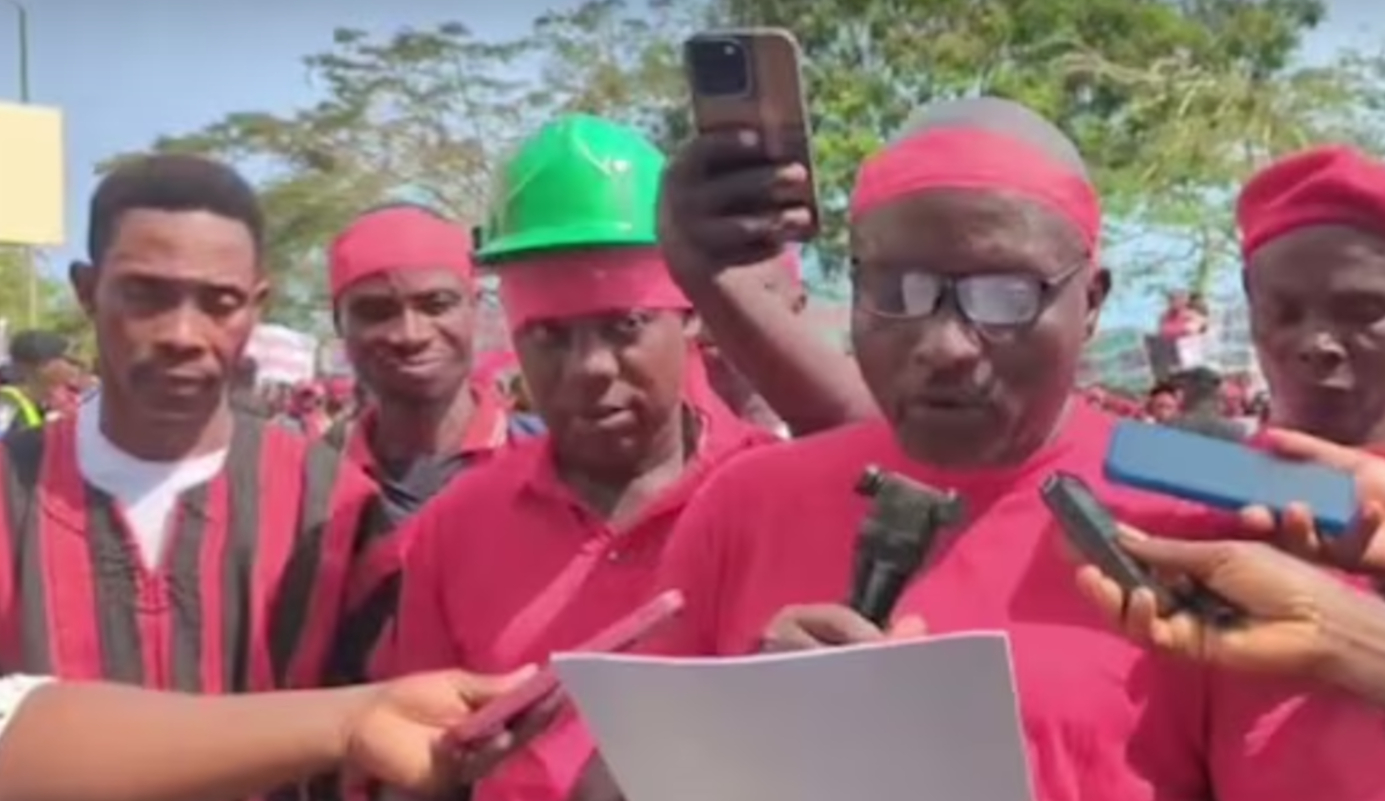
Thousands of rubber farmers from communities across the Western Region marched peacefully through Sekondi-Takoradi to protest calls for a total ban on raw rubber exports.
The demonstrators, organized by the Rubber Farmers Association of Ghana (RUFAG) and others in the industry, wore red and black and carried placards opposing the proposed ban.
The farmers, who are been supported by some local chiefs and parts of the rubber industry to stop exports of unprocessed rubber with the goal of boosting domestic value addition.
Current rubber exports are regulated under Ghana’s legal framework (with permits and oversight by the Tree Crops Development Authority (TCDA) and other agencies).
Claims that exports are “unchecked” and harmful to industrialisation are misleading and banning raw exports would harm farmer incomes, depress prices, and limit competition in the rubber market.
The broader rubber sector supports hundreds of thousands of jobs beyond processing plants, including tappers, traders, transporters and others and cutting exports could deepen rural poverty.
They also point out that Ghana lacks large-scale downstream rubber manufacturing (e.g., tyres or finished products), so forcing all output into local processing may not be realistic at this stage.
Some of the slogans and demands raised by the demonstrators during the march included “No Instant Payment”, “No Ban”, No to Monopoly”, “Rubber Is for All Ghanaians”
The Western Regional Minister, Joseph Nelson, received the petition and thanked demonstrators for their peaceful conduct. He said their concerns will be forwarded to relevant authorities, including the President.
Calls for banning raw rubber exports had been growing in late 2025, including from the Western Regional House of Chiefs, who argued that banning exports would help promote value addition and local industry.
About the Author