
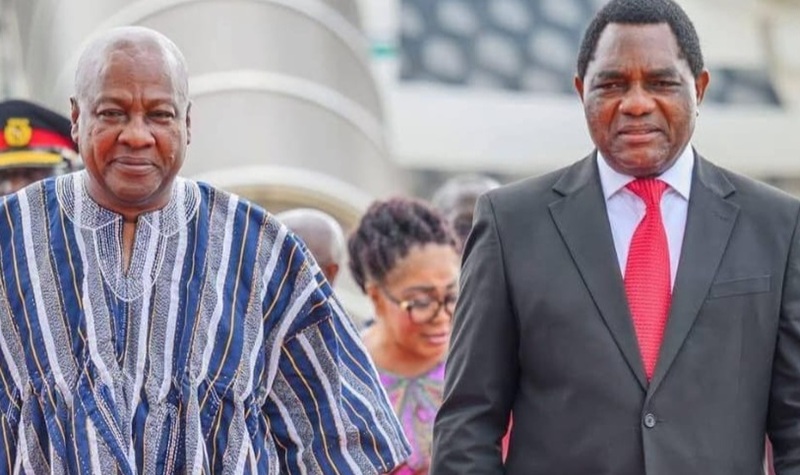
President John Dramani Mahama, currently serving his second term after returning to office in January 2025, is in Zambia for a three-day state visit aimed at strengthening diplomatic and economic ties between the two countries.
He arrived in Lusaka on Wednesday, February 4, 2026, where he was received with full state honours at the Kenneth Kaunda International Airport by Zambian President Hakainde Hichilema.
Upon his arrival, President Mahama wore a traditional northern Ghanaian smock, known locally as a fugu.
The garment, handwoven and symbolic of authority, cultural pride, and wisdom in Northern Ghana, has been a staple in Mahama’s public appearances over the years, representing both his heritage and political identity.
However, the smock sparked an immediate wave of ridicule on Zambian social media.
Many Zambians unfamiliar with the cultural significance of the attire took to platforms like X and Facebook to mock the President, claiming that he was wearing a “blouse” and joking that he had borrowed it from his wife, Lordina Mahama.
Some comments even suggested that his tailor had “done him a disservice” by creating what they described as a female garment.
These reactions quickly went viral, igniting a flurry of online debate and trolling.
The online mockery drew swift and strong reactions from Ghanaians, who defended their President.
Cultural advocates and ordinary citizens highlighted that the smock is a respected symbol of Ghanaian tradition and leadership, often worn by chiefs and elders as a mark of authority and dignity.
Many argued that the criticism reflected ignorance about Ghanaian culture rather than a valid critique of the President’s appearance.
Interestingly, members of the opposition, the New Patriotic Party (NPP), also joined in defending President Mahama, emphasizing that political differences should not prevent the defence of national symbols abroad.
Some commentators pointed out that cultural respect transcends partisan politics, arguing that the identity should not be mocked simply because it is unfamiliar to foreign observers.
The controversy over the smock did not interfere with the official agenda of the visit. President Mahama engaged in bilateral talks with President Hichilema, addressed the Zambian National Assembly, and signed several memoranda of understanding, including discussions on potential visa waivers to facilitate travel between the two countries.
The visit is intended to boost trade, strengthen political cooperation, and enhance people-to-people relations in the region.
Observers note that the incident underscores a broader challenge for African leaders in international diplomacy: the need to balance cultural authenticity with global perception.
While some foreign audiences may be unfamiliar with African traditional attire, such symbols remain central to national identity and pride.
About the Author