
A fresh controversy has emerged in the Parliament of Ghana ahead of the 2026 State of the Nation Address (SONA), after the First Deputy Speaker, Bernard Ahiafor, firmly shut down a proposal to include cocoa farmers and other grassroots groups among invited guests to the presidential ceremony.
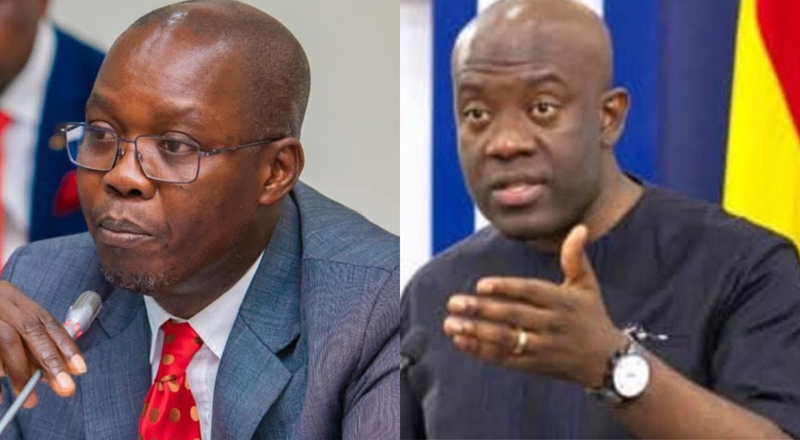
The incident occurred during parliamentary proceedings when the Member of Parliament for Ofoase-Ayirebi and Ranking Member on the Economy and Development Committee, Kojo Oppong Nkrumah, rose on the floor of the House following an announcement by the Leader of Government Business that the President would address Parliament and that Members were expected to be seated by 9:30am to ensure full participation in the event.
Using the occasion to raise a broader national concern, Oppong Nkrumah questioned the long-standing tradition of filling the parliamentary gallery almost exclusively with members of the political elite, senior public officials, the military high command, and the diplomatic corps.
He argued that SONA, as a national moment of reflection and direction-setting, should symbolically represent all sectors of Ghanaian society, especially those whose labour underpins the economy.
He specifically proposed the inclusion of cocoa farmers and other ordinary citizens, describing them as “critical parts of our society” who deserve visibility at such a high-profile national event.
Drawing on historical precedent, Oppong Nkrumah recalled that during the previous administration of John Dramani Mahama, certain ordinary occupational groups, including one Amina, who benefited from pig rearing, had been invited into the gallery as part of efforts to reflect the broader Ghanaian population during major state ceremonies.
However, the proposal was immediately blocked by the First Deputy Speaker, Bernard Ahiafor, who reacted sharply on the floor of the House.
In a blunt intervention, the Deputy Speaker reminded Oppong Nkrumah that he is no longer part of the executive arm of government and therefore has no authority to influence decisions regarding who is invited to or excluded from the State of the Nation Address.
His response effectively closed the matter procedurally and politically.
Bernard Ahiafor, a member of the National Democratic Congress (NDC) and MP for the Akatsi South Constituency, currently serves as First Deputy Speaker in the Ninth Parliament of the Fourth Republic.
The exchange has injected a new political dimension into preparations for the President’s address.
Traditionally, SONA is a highly choreographed national event attended by top government officials, heads of institutions, foreign diplomats, security chiefs, traditional leaders, and selected dignitaries, making the composition of the audience a powerful symbol of who the state chooses to recognize and elevate.’
By blocking the proposed inclusion of cocoa farmers, the Deputy Speaker’s response has reinforced the elite character of the ceremony, while Oppong Nkrumah’s intervention has reopened a wider debate about inclusivity, symbolism, and representation in the democratic rituals.
About the Author