

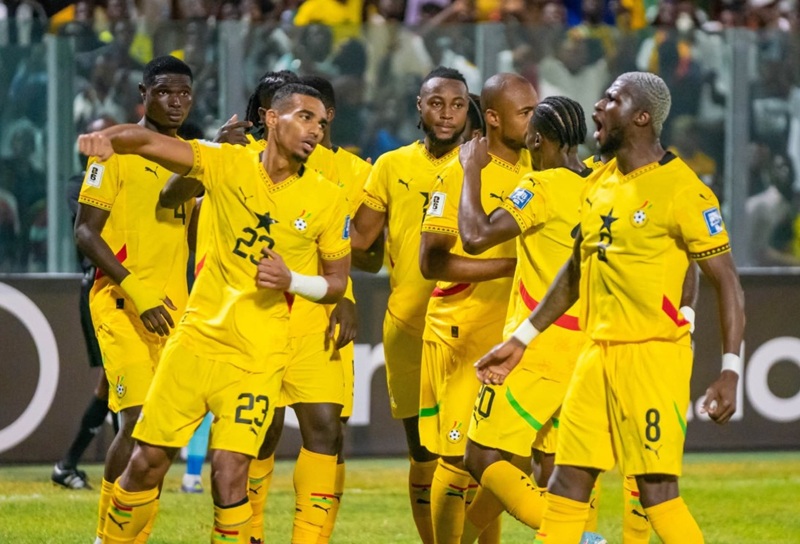
The Ghana Football Association’s announcement of a pre-World Cup friendly against Mexico in May was meant to inspire confidence and optimism.
On the surface, it appeared to be a statement of intent—a valuable opportunity for the Black Stars to test themselves against one of the co-hosts of the 2026 FIFA World Cup.
Instead, the timing of the fixture has raised serious concerns about its value to the actual readiness for the tournament.
Ghana are already scheduled to face Austria and Germany in March as part of their World Cup build-up.
Those matches fall within the FIFA international window, ensuring player availability and full squad access. The Mexico friendly, however, is fixed for May 22—a date that sits outside the FIFA international calendar, a detail that fundamentally changes the meaning and usefulness of the match.
Under FIFA regulations, clubs are not obliged to release players for international duty outside official windows.
This means Ghana could be forced into what should be a crucial World Cup tune-up match without several key players, especially with most European leagues still in full competition at that stage of the season. The risk is not theoretical—it is structural and highly probable.
This concern is magnified by the broader context. The Black Stars missed out on the 2025 Africa Cup of Nations (AFCON) in Morocco, losing a major competitive platform to build cohesion, test systems, and sharpen tactical identity. As a result, these international friendlies are no longer routine warm-up games; they represent the only meaningful preparation platform available to head coach Otto Addo ahead of the World Cup.
That reality makes squad consistency critical. With just weeks to the tournament, preparation games should be used to consolidate the core squad, refine tactical structure, and build chemistry among the players expected to form the World Cup starting XI—not to assemble fragmented teams shaped by player unavailability.
Recent history offers a warning. At the Unity Cup in London last year, Ghana were without regular starters such as Mohammed Kudus, Thomas Partey, Antoine Semenyo, and Alexander Djiku. Eleven players who featured in that mini-tournament never returned for the next four competitive fixtures, raising questions about the long-term sporting value of such exercises. Only Abu Francis eventually re-emerged in subsequent friendlies against South Korea and Japan in November 2025.
Injury concerns further complicate the situation. Mohammed Kudus is already set to miss the March friendlies against Austria and Germany, and there is a strong possibility he could also be unavailable for the Mexico game, with Tottenham Hotspur scheduled to play during the same period.
If that scenario plays out, a player almost certain to start the World Cup group matches could miss five consecutive high-profile preparatory games—a damaging gap in tactical integration and match rhythm.
On paper, the preparation schedule looks impressive: Austria, Germany, and Mexico represent high-quality opposition. In reality, inconsistent player availability, poor alignment with the FIFA calendar, and constant squad changes risk turning these matches into disconnected exhibitions rather than meaningful preparation tools.
Yes, other nations also arrange friendlies outside conventional windows. But the situation is unique. Having missed AFCON and with limited opportunities left before the World Cup, every match carries extra weight. Every fixture must be maximized for cohesion, structure, and readiness.
About the Author


