
The Deputy Minister for Education, Dr Clement Abas Apaak, has praised the collaborative efforts among the Ministry, Parliament, and key educational institutions to advance Ghana’s education sector.
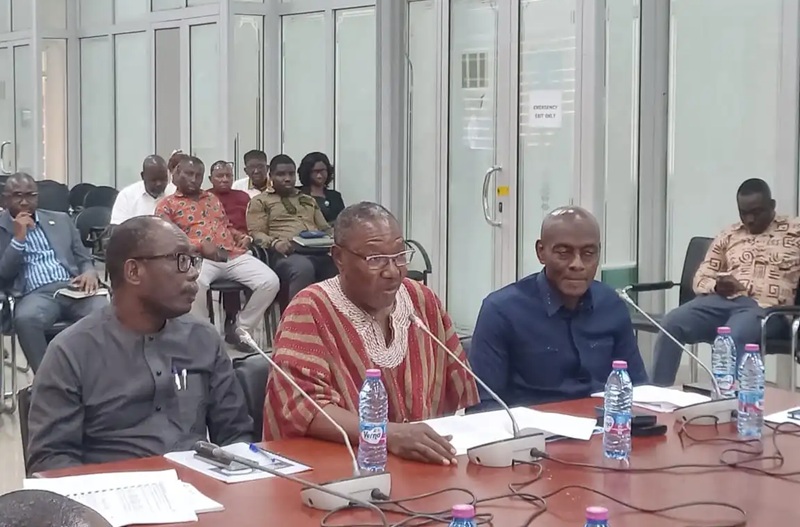
He made these remarks when he led the Ministry of Education to the maiden sitting of the Parliamentary Committee on Economy and Development on Tuesday to discuss the 2024 National Annual Progress Report, alongside officials from the Ghana Education Service (GES) and the Commission for Technical and Vocational Education and Training (CTVET).
“Your presence here today reflects the Ministry’s commitment to transparency, accountability, and collaboration with Parliament in advancing Ghana’s education agenda,” Dr Apaak said, emphasising the cooperative approach to monitoring and reviewing sectoral progress.
He noted that the annual report, prepared by the National Development Planning Commission, “serves as a key monitoring and accountability tool that helps government, Parliament, and stakeholders assess the extent to which national policies and programmes are delivering results for the Ghanaian people.”
The Deputy Minister noted that the 2024 report assesses progress against the national policy framework titled Agenda for Jobs 2: Creating Prosperity and Equal Opportunities for All (2022–2025).
He underscored that education remains central to national development, explaining that “education remains a critical pillar within this framework because it underpins human capital development, economic productivity, and national transformation.”
Dr Apaak stressed the importance of technical and vocational training in equipping young people with relevant skills.
“Ensuring access to quality education, strengthening technical and vocational training, and equipping young people with relevant skills are essential to achieving the broader development aspirations outlined in Agenda for Jobs 2,” he said.
He also welcomed the participation of GES and CTVET officials in the session, noting that their presence reinforces the Ministry’s commitment to accountability and constructive engagement with Parliament.
“This engagement provides us with an important opportunity to review progress, share insights, and collectively assess how far we have advanced in implementing our national development priorities,” Dr Apaak added.
In closing, he thanked Parliament for its continued oversight and support in strengthening Ghana’s education sector.
He noted that such collaboration ensures national policies and programmes deliver meaningful results for Ghanaians, particularly in improving educational access, quality, and outcomes.
About the Author