
Something struck me during this past weekend, and I think I should share it with every Ghanaian.
I asked myself a simple question: which aspect of our lives as a people has seen tremendous change and improvement in our generation?
I decided to use a base year of 1992 because that was when we decided, as a people, to return to multiparty democracy and usher in our current Fourth Republican Constitution.
In areas of health, education, security, social services, housing and rent, youth employment, infrastructure, sports, music, movies and media, as a Ghanaian, do you think leadership over the years has done enough to better your life?
Can we confidently say that from basic school through JHS to SHS and the tertiary level, Ghana as a country, over the last 30 years, has seen massive improvements in teacher incentives and remuneration, improved teaching methods, improved schools and facilities, and that the quality of the Ghanaian student has improved?
In AD 2026, Ghana still has schoolchildren studying under trees, and for over 30 years, leadership has not been able to solve this basic problem.
Health is wealth and one of the most important issues every leader must take seriously. It has been 33 years of electing leaders to fix the challenges in the healthcare system. We continue to experience no-bed syndrome, leading to avoidable deaths, including maternal mortality, with a recent case occurring less than a month ago.
Doctors, nurses, midwives and other healthcare professionals are constantly demanding improved conditions of service, which sometimes even lead to strike actions that negatively affect healthcare delivery across the country.
We currently have over 50,000 healthcare workers at home unemployed, even though there is a huge gap in the doctor- and nurse-to-patient ratio according to international standards.
Ghana, as a country, however, continues to churn out thousands of these healthcare professionals from our tertiary institutions annually.
Are you safe as a Ghanaian after 33 years under the Fourth Republican Constitution? Go back some 30 years and you will see repeated retooling of our security services, but do you feel secure in your small community or neighbourhood, knowing that if you close from work at 7pm, you will get home safely?
There are also constant reports of clashes leading to many deaths in various communities across the country, and I keep asking: are our security and intelligence agencies not picking up intelligence beforehand to avert some of these needless deaths?
Ghana’s population as of 1993 was 16.5 million, and in 2026 it is estimated at around 33 million, with a housing deficit close to 1.5 million. There have been various housing policies by the state to bridge this gap, but the housing challenges faced by many Ghanaians still persist.
The Rent Control Department, which is the state entity mandated to enforce rent laws, has failed woefully over the years, and citizens’ trust in that institution is at an all-time low.
Consistently, Ghanaian youth and families have complained about high rent charges and demands for more than six months’ rent in advance, which is alien to the law. Very little has been done to fix this problem because the forces of demand and supply, coupled with desperation among tenants, continue to fuel these issues.
What has happened to the various housing policies by successive governments aimed at bridging the housing deficit to curb the rent crisis affecting Ghanaians?
The State Housing Company has a mandate, but how many of its housing units are affordable for ordinary Ghanaians such as teachers, doctors, nurses, bankers, market women, taxi drivers and other citizens?
Sports bring Ghanaians and people all over the world together to foster national cohesion and pride. Ghanaian sports have faced many challenges, from poor infrastructure to inadequate funding for sports beyond football.
Our local football leagues have deteriorated to a level where fans no longer attend matches in large numbers. Our biggest league fixture, Kotoko versus Hearts, is currently struggling to fill the Accra Sports Stadium or the Baba Yara Sports Stadium.
The welfare of athletes and the payment of bonuses have consistently courted controversy, with frequent delays and non-payment.
The Black Stars have failed to win the AFCON since our last victory in 1982 in Accra, and the saddest part is that we even failed to qualify for the most recent AFCON, despite it being expanded to 24 teams. In the edition prior, when we did qualify, we failed to win a single game and could not progress from a group made up of Cape Verde, Egypt and Mozambique in 2024.
Music and the arts appear to be one area where we are doing relatively well, with many young talents gaining recognition beyond Ghana’s borders. However, this seems largely because the sector is not under the direct control of the state, as government policies and programmes have had little to do with the successes recorded.
The state has failed to properly maintain the National Theatre in Accra, built some 33 years ago, and the sorry state of that national edifice reflects our attitude and poor maintenance culture as a country.
There are no ultra-modern event centres, and musical concerts are often held at venues that could potentially cause stampedes and avoidable accidents.
Almost every resident in every region complains about poor road infrastructure. Roads linking farms to markets are in terrible condition, leading to higher food prices. In remote parts of Ghana, road networks are so bad that they affect healthcare delivery, leading to avoidable deaths.
With improvements in technology, why are roads constructed in the 1990s better than many of those constructed today? Corruption, kickbacks and cronyism have become so pervasive that road contracts are awarded to mushroom companies with little or no technical expertise, and this is evident in the poor quality of road construction compared to years past.
One of the biggest issues currently facing Ghana is youth unemployment, which has reached such alarming levels that a former national security minister described it as a national security threat.
Successive governments have introduced programme after programme, but almost all have been unsustainable and a drain on public resources, with little tangible impact, as youth unemployment continues to rise.
I reflected on the various entrepreneurship policies introduced over the years and asked myself: is there a fully Ghanaian-owned business that has grown into a global brand? Only Kasapreko readily came to mind. There may be others I cannot immediately recall, but the point remains that after 69 years of independence, we should have more home-grown Ghanaian businesses expanding into international brands and employing large numbers of Ghanaian youth.
There must be a deliberate and strategic state policy to support Ghanaian businesses, one that is free from nepotism and cronyism. It may sound cliché to say the private sector is the engine of growth, but it is true. The state has a responsibility to help build and support Ghanaian businesses as part of efforts to curb the unemployment crisis.
After reflecting on how my life as a Ghanaian has or has not improved since the inception of the Fourth Republic in 1993, I find it necessary to start a conversation about how leadership has failed citizens and to call for accountability, because we risk leaving a worse Ghana for the generations yet to come.
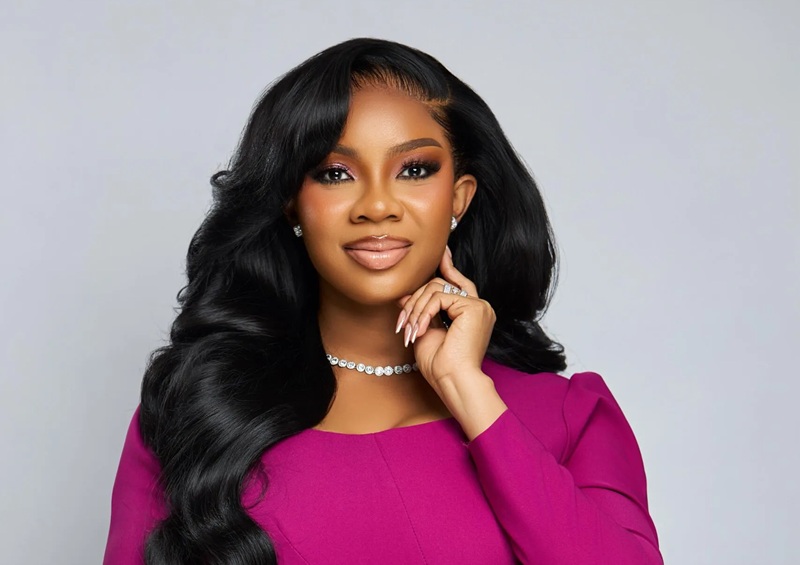
Written by: Serwaa Amihere, Esq.
Associate Lawyer & Broadcaster
About the Author