

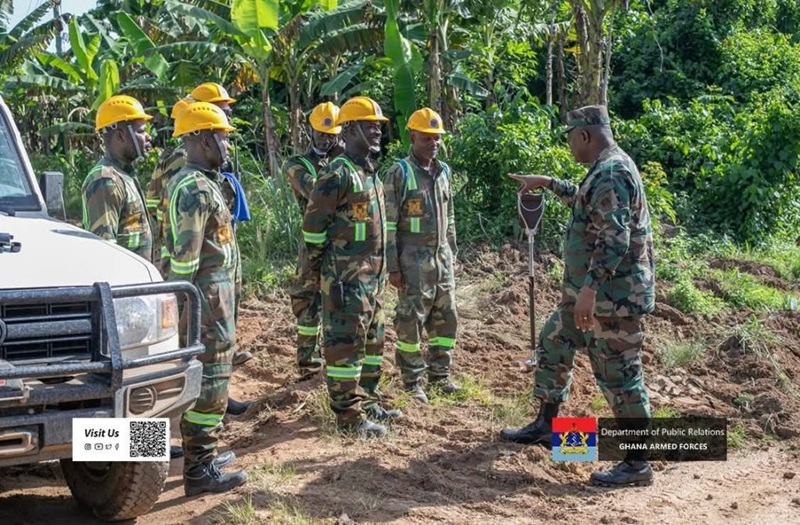
Tension is mounting in several communities along the proposed route of the ambitious Accra-Kumasi Expressway project as some residents have reportedly clashed with military personnel deployed to clear portions of land earmarked for the construction of the road.
The affected residents, many of whom are farmers and landowners, accuse the soldiers of destroying farms and properties without prior consultation, compensation, or stakeholder engagement.
According to the residents especially in Akyem Asene, attempts to raise concerns over the ongoing demolition and clearing exercises have allegedly been met with intimidation and physical assault by some military personnel supervising the operation.
Several residents who spoke to the media expressed anger and frustration over what they described as the “forceful takeover” of their lands for the execution of the national project.
They claimed that farmlands cultivated with food crops and cash crops had been destroyed by heavy equipment under military protection, leaving many families uncertain about their livelihoods.
According to some residents, no compensation arrangements have been communicated to them despite the scale of destruction already taking place within the designated corridor of the road project.
Others alleged that there had been little or no engagement with local communities before the commencement of the clearing exercise.
The development has reportedly triggered protests in some of the affected communities, where aggrieved residents attempted to resist the ongoing works.
Witnesses claimed confrontations broke out between some youth and the military officers deployed to the area, leading to chaotic scenes and allegations of assault.
The controversy comes barely days after the Ghana Armed Forces publicly announced that its engineering unit had commenced land-clearing activities for the construction of the new Accra-Kumasi Expressway, one of the government’s flagship road infrastructure projects aimed at improving transportation between the southern and middle belts of the country.
The Chief of Defence Staff, Lieutenant General William Agyapong, recently visited soldiers stationed at Asuboa near Akyem Oda, where military engineers are operating from a temporary campsite to clear land for the expressway project.
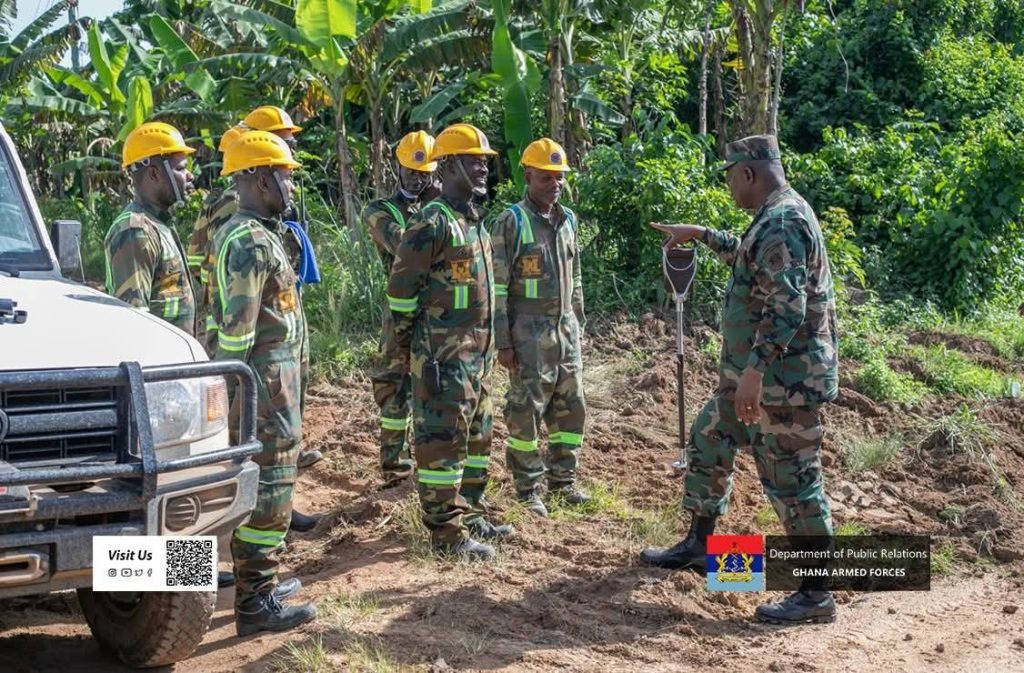
The report indicated that the soldiers are working within a 175.6-kilometre corridor earmarked for the road construction. Project Engineer, Major Evans Biney, reportedly explained that the operation forms part of preliminary engineering and feasibility works necessary for the commencement of the expressway construction.
He disclosed that four work gangs had been deployed to undertake clearing activities day and night along the entire stretch of the corridor.
At the time of the military high command’s visit, about 17.75 kilometres of land had already been cleared during the mobilisation phase of the project.
Major Biney also acknowledged that compensation valuation processes remained one of the major challenges confronting the project, alongside heavy rains, dense vegetation, and limited night visibility.
Despite these difficulties, he expressed optimism that the works would be completed within the projected 20-week timeline.
Project Coordinator, Major Edem Anku, had earlier stated that the military had maintained constructive engagements with traditional authorities within the affected communities to ensure smooth execution of the project.
He also indicated that arrangements were being made to involve local youth in minor site-related activities and administrative support roles.
During his interaction with some affected residents, Lieutenant General Agyapong reportedly assured communities that government remained committed to paying fair compensation to persons whose properties and lands would be affected by the project.
The Accra-Kumasi Expressway is expected to link the Greater Accra Region, Eastern Region and Ashanti Region through major communities including Ablekuma, Adeiso, Asamankese, Anamase, Akyem Oda, Ayirebi, Ofoase, Asante Achiase, Kwaso and Sawua.
However, the growing unrest among affected residents is now raising concerns over whether compensation, community engagement, and resettlement issues are being adequately addressed before the full-scale execution of the project.
Some residents are therefore calling on the government, the Ministry of Roads and Highways, and the military high command to immediately intervene and open dialogue with affected communities to prevent further confrontation and ensure peaceful implementation of the project.
About the Author