
The Asantehene, Otumfuo Osei Tutu II, has reignited the national debate over the powers and limits of the chieftaincy institutions after openly challenging the authority of the National House of Chiefs in the installation of traditional rulers.
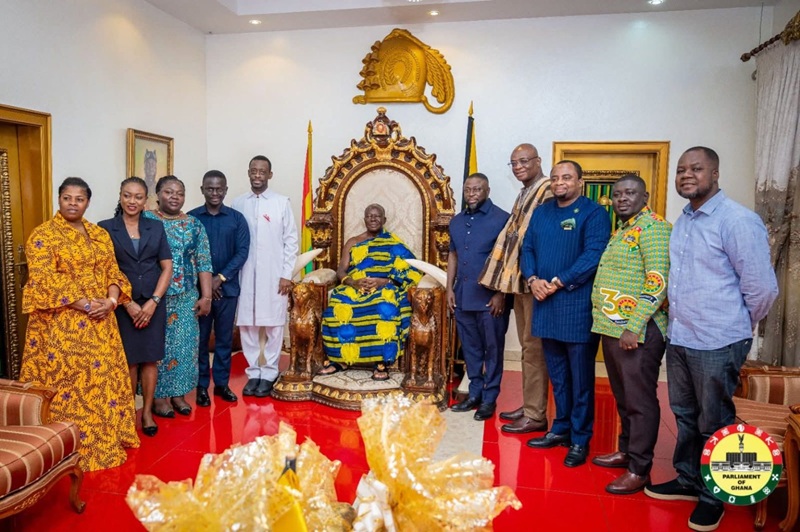
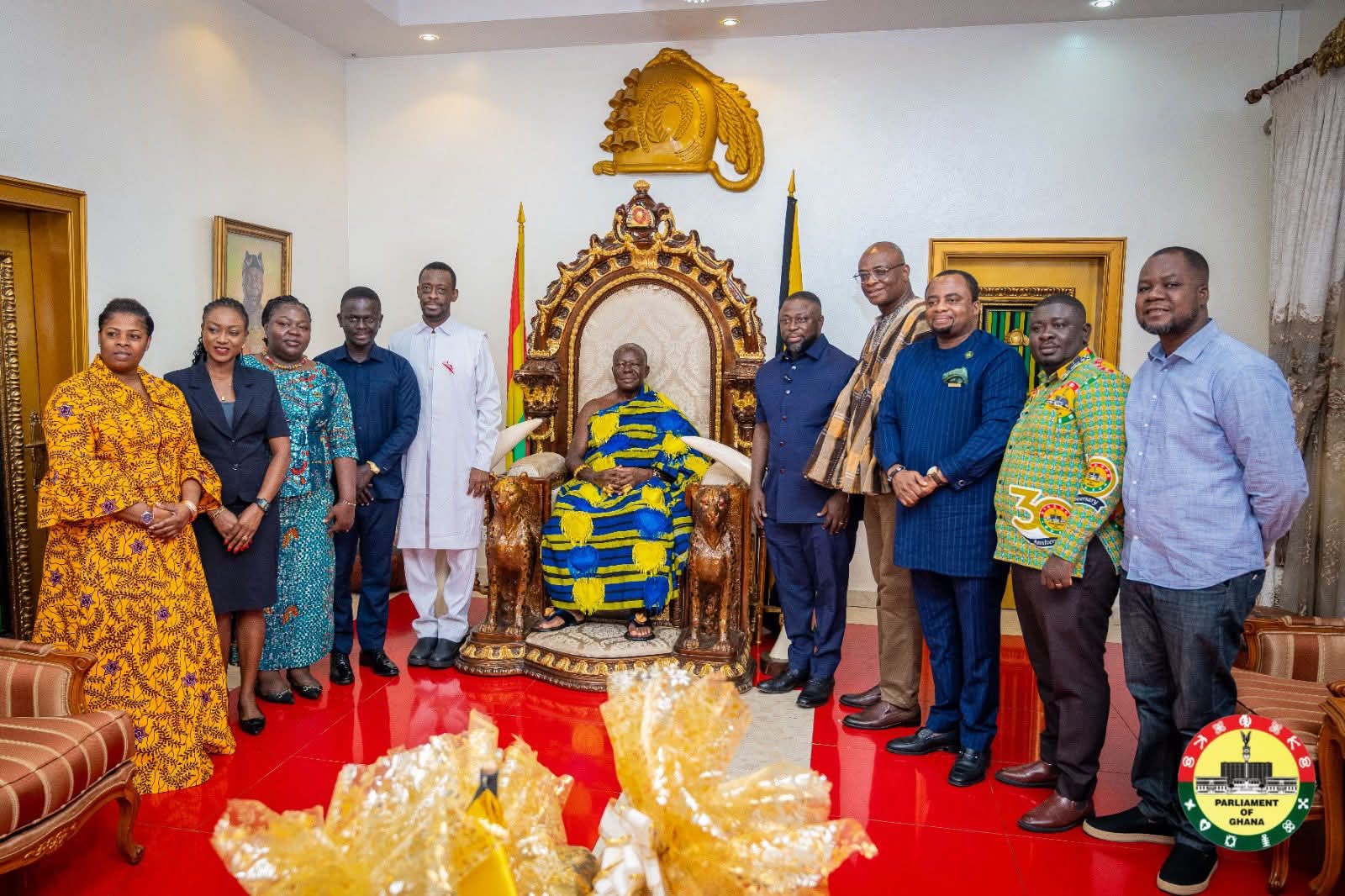
Speaking at the Manhyia Palace on Tuesday, May 13, 2026, during a courtesy call by Parliament’s Select Committee on Chieftaincy and Religious Affairs, the Asantehene insisted that the National House of Chiefs has no constitutional or customary mandate to install chiefs, stressing that such powers rest solely with traditional councils.
His comments come at a time when chieftaincy disputes across Ghana continue to generate tension, litigation and security concerns, with many traditional leaders accusing political actors and state institutions of interfering in customary matters.
From Bawku in the Upper East Region to Sampa in the Bono Region, disputes over succession and recognition have increasingly become politically sensitive issues drawing national attention.
Addressing members of the committee, Otumfuo warned against what he described as the creeping politicisation of chieftaincy affairs, particularly within the structures of the National House of Chiefs.
According to him, the integrity and independence of traditional authority must be protected from political influence if peace and stability are to be maintained in the country.
“What everybody must note is the House of Chiefs cannot install chiefs. They don’t have that authority. It is the traditional council that does,” the Asantehene declared firmly.
The statement is widely being interpreted as part of a broader push by the Asantehene to defend the autonomy of traditional institutions amid growing disputes over recognition, gazetting and succession.
His intervention also follows recent tensions surrounding the Sampa chieftaincy dispute, where he accused some government officials of interfering in matters already determined through customary and judicial processes.
Otumfuo further called for a clear definition of the responsibilities of the various Houses of Chiefs, urging Parliament and relevant state institutions to address ambiguities that often create confusion in the handling of traditional matters.
According to him, misunderstandings over institutional mandates continue to contribute to unnecessary conflicts within the chieftaincy system.
The Asantehene also used the occasion to stress his independence in handling traditional affairs, insisting that he does not depend on government authority in resolving customary disputes.
He explained that his leadership decisions are guided strictly by the customs, traditions and long-established practices of the Asante Kingdom.
Despite his strong remarks, Otumfuo indicated that he bears no personal grudges and has no intention of acting as an autocratic ruler. Rather, he said his commitment remains centered on truth, fairness and preserving the sanctity of traditional governance.
Touching on historical territorial arrangements, the Asantehene stated that the former Brong Ahafo area historically formed part of Western Ashanti before constitutional and administrative changes altered governance structures over the years.
He maintained, however, that historical realities should not be distorted for political convenience.
His comments are likely to spark renewed conversations about the relationship between traditional authority and the modern Ghanaian state, especially at a time when some chiefs and political actors remain divided over questions of allegiance, jurisdiction and customary authority.
The visit by the Parliamentary Select Committee itself formed part of efforts to strengthen collaboration between Parliament and traditional authorities on issues affecting chieftaincy and religious affairs
The Chairman of the Committee, Fred Kyei Asamoah, praised the Asantehene for his role in resolving longstanding disputes and promoting peace in various communities across the country.
Dr. Asamoah also congratulated Otumfuo on his 27th anniversary on the Golden Stool, describing his reign as one marked by stability, cultural preservation and national influence.
During the engagement, the Asantehene advocated increased financial support for the National House of Chiefs to enable it effectively regulate and support the institution of chieftaincy.
He argued that despite the important role chiefs play in national development and conflict resolution, the institution remains under-resourced.
He further stressed that truth and justice must remain central to traditional leadership, warning that the absence of fairness in the handling of disputes would continue to undermine peace and development in many communities.
The committee members later toured the Manhyia Palace Museum, where they were taken through the history, culture and heritage of the Asante Kingdom — a symbolic reminder of the enduring influence of traditional authority in the governance structure.
About the Author