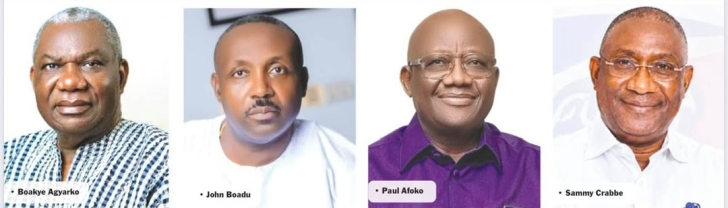


The New Patriotic Party (NPP) Minority Caucus in Parliament has intensified scrutiny over the controversial transfer of the Damang Mine to Engineers and Planners (E&P), a company owned by President John Mahama brother, demanding that the government immediately release the full mining agreement and provide a comprehensive account of the company’s operations since taking control of the strategic gold mine.
In a strongly worded letter dated July 28, 2026, addressed to the Minister for Lands and Natural Resources, Emmanuel Armah-Kofi Buah, the Minority argues that Parliament cannot effectively perform its constitutional oversight responsibility without access to the details surrounding one of the most significant mining transactions.
The letter was signed by Kwaku Ampratwum-Sarpong, Ranking Member of Parliament’s Committee on Lands and Natural Resources and MP for Mampong, on behalf of the Minority Caucus.
The latest demand follows months of public debate surrounding the future of the Damang Mine after the mining lease previously held by Gold Fields Ghana Limited, through Abosso Goldfields Limited, expired.
Following a so-called competitive tender process conducted by the Minerals Commission under the Minerals and Mining (Licensing) Regulations, 2012 (L.I. 2176), the mining lease was awarded to Engineers and Planners Limited (E&P), which officially assumed control of the mine on April 18, 2026.
Describing the Damang Mine as a strategic national asset with enormous economic importance, the Minority insists that the transfer has generated widespread public interest and therefore demands the highest standards of transparency and accountability.
The caucus is requesting a certified copy of the Damang Mine lease agreement together with every associated operating, transitional and ancillary agreement signed between the Government of Ghana and Engineers and Planners Limited, owned by Ibrahim Mahama.
It is also seeking copies of all schedules, annexures, side letters and the Minerals Commission Tender Committee report that formed the basis for awarding the mining lease to E&P.
Beyond the contractual documents, the Minority is demanding a detailed operational and financial report covering E&P’s management of the mine from April 18, 2026, to date. Specifically, it wants monthly records of gold production measured in ounces or kilograms, total revenue generated from gold sales and other mineral by-products, including sales made to the Ghana Gold Board (GoldBod) and other buyers.
The caucus is equally requesting a full breakdown of taxes paid to government, including corporate income tax, Pay-As-You-Earn (PAYE) and other statutory levies. It is also asking for details of royalties paid under the Minerals and Mining Act, 2006 (Act 703) as well as any dividends or other payments made to the state in respect of its 10 percent free carried interest in the mine.
According to the Minority, its request should not be interpreted as an attempt to prejudge either the legality of the transaction or the operational performance of Engineers and Planners.
Rather, it argues that Ghanaians deserve to know how a strategic national mining asset transferred into indigenous ownership is being managed, adding that Parliament cannot discharge its constitutional oversight mandate without verified and current information.
The Minority has given the Lands Ministry 14 working days to furnish the requested information. It further indicated that where any aspect of the request requires additional time to compile, the Ministry should communicate the earliest possible date on which the outstanding information would be made available.
Copies of the letter were also forwarded to the Speaker of Parliament, the Chairperson of the Parliamentary Committee on Lands and Natural Resources, and the Chief Executive Officer of the Minerals Commission, signalling the Minority’s intention to keep parliamentary oversight institutions actively engaged in the matter.
The Damang Mine takeover has remained one of the most closely watched mining developments in 2026, with government presenting the transition as a milestone for indigenous participation in the mining sector, while critics continue to call for greater openness regarding the terms of the agreement, operational performance and the financial benefits accruing to the state.
About the Author