
Do Black event promoters get a fair shake? As Ghanaian organisers look ahead to 2027, new research raises questions about licensing, production costs and the price audiences pay.
Putting on an event is expensive. But are Black promoters also facing barriers that make an already demanding business harder?
A report published by Black Lives in Music on 14 October finds that Black and South Asian music events in London face disproportionate scrutiny, restrictions and cancellations compared with other events. It also finds that genres including Afrobeats and dancehall are treated as higher risk without credible supporting evidence.
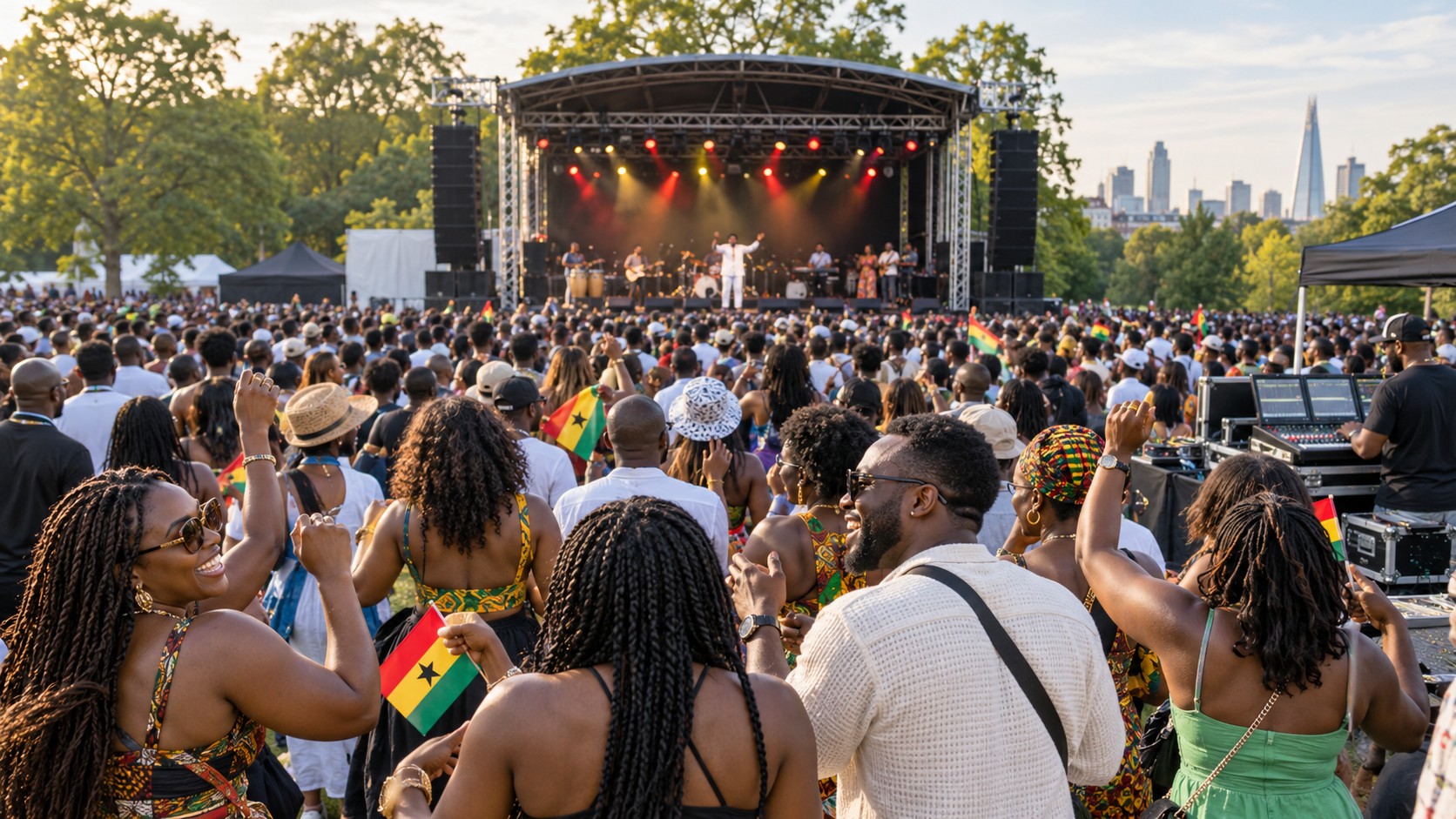
For Ghanaian audiences, promoters and businesses, the findings deserve attention. Behind the concerts and festivals that bring our community together are people investing money, time and their reputation—often well before knowing whether ticket sales will cover the bills.
More than the name on the poster
When an event is announced, the conversation often turns to the artists, venue and ticket price.
The production bill receives less attention. Depending on the event, organisers must budget for venue hire, performers, flights, accommodation, staging, sound, security, insurance and promotion.
Companies such as the Akwaaba Group, one of the biggest Ghanaian event promoters in the UK, operate in this demanding events market, bringing Ghanaian entertainment and audiences together.
Their inclusion here does not imply that Akwaaba UK has experienced the unequal treatment described in the report. The findings concern the wider London sector, but raise questions relevant to Ghanaian events as planning for 2027 develops.
If extra conditions are imposed, are the reasons clear? Are organisers given enough notice to adjust their plans? And are comparable events being treated consistently?
Who carries the cost?
An additional requirement can mean another bill. A late cancellation can leave organisers facing commitments they cannot recover.
The effects can also reach artists, food vendors, photographers, production crews, and other businesses that rely on the event for income. For audiences, higher costs may mean more expensive tickets or fewer events to choose from.
The Race Equality in Music Event Licensing report, known as REMEL, estimates that the barriers it identifies result in £127 million to £141 million in lost live music spending across London each year. That is an estimate for the wider sector, not a figure for Ghanaian events alone.
High production costs do not, by themselves, prove discrimination. The research raises the concern of whether some organisers face additional obstacles because of the music they present or the audiences they attract.
Fair treatment and safe events
Everyone buying a ticket should expect a safe, properly organised event. Promoters have responsibilities, and authorities have a role in protecting the public.
The report’s argument is that decisions should rest on clear evidence and consistent standards. Its researchers acknowledge gaps in the available records, including inconsistencies in the recording of ethnicity and in licensing decisions.
Recommendations include clearer evidence for restrictions, publication of licensing data and more affordable routes to challenge decisions. The Musicians’ Union has backed calls for reform.
For Ghanaian communities, this conversation matters before next year’s posters appear. Events provide entertainment, but they also support businesses, introduce new talent and create spaces where culture is shared across generations.
Audiences are entitled to question ticket prices and expect value. Promoters are equally entitled to clear requirements and fair decisions.
Before asking why an event costs so much, it is worth asking what it takes to put it on and whether every organiser gets a fair chance.
About the Author