
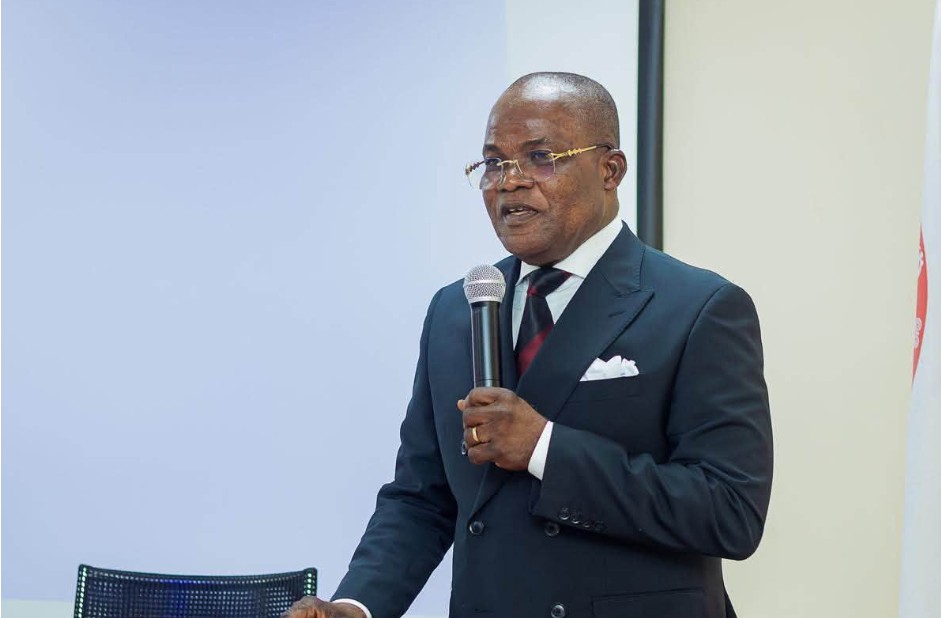
The Clerk to Parliament, Ebenezer Ahumah Djietror, has urged the Parliamentary Press Corps to highlight Parliament’s infrastructure challenges, including the need for a new chamber and adequate workspace, to help the public better understand the institution’s needs.
He described journalists as integral partners in Parliament’s work, stressing that inadequate facilities affect their ability to report promptly and effectively.
Mr Djietror made the remarks at a two-day professional development workshop for the Parliamentary Press Corps in Accra, organised by Parliament’s Media Relations Department.
“We need to look critically at the infrastructure development. Don’t tell me forum non conveniens. The forum is convenient because you are the men and women with a pen whose functions, duties and mandates are to inform the public. The public should be appropriately informed,” he said.
He dismissed perceptions that journalists spend only a few hours in Parliament, noting that their work often keeps them at the House for extended periods.
“Sometimes we are here for sixteen hours. You should be able to carry out your work, report appropriately, and timely reporting is also important,” he stated.
The Clerk explained that the absence of adequate workspace could delay publication, as journalists sometimes have to travel to their offices before filing stories, undermining the timeliness of information needed for public decision-making.
He therefore urged the Press Corps to draw attention to these challenges and help the public appreciate the rationale behind Parliament’s infrastructure development plans.
“The net effect of what I’m saying is that you need to avert your mind to these challenges, so that the issues of ‘Drop That Chamber’ business should be a thing of the past. It is your responsibility. We are partners. Report appropriately. Let the public appreciate that, yes, we need it,” he charged.
The Clerk’s remarks revive the debate surrounding the controversial “Drop That Chamber” campaign of 2019, which erupted after Parliament proposed a new chamber complex estimated to cost US$200 million.
The proposal drew widespread public opposition over concerns about its cost and competing national development priorities, prompting the Parliamentary Service Board to remove the project from its immediate agenda.
Although the development of a new chamber remained part of Parliament’s long-term plans, Mr Djietror’s latest comments have renewed attention on the institution’s infrastructure needs and the challenge of building public understanding and support for future development proposals.
Mr Djietror also linked Parliament’s infrastructure needs to Ghana’s commitments under the Open Government Partnership (OGP) and Open Parliament initiatives, emphasising the importance of collaboration between Parliament and the media in strengthening democratic governance.
He urged journalists to see themselves as partners in the institution’s development rather than outsiders who simply come to cover proceedings.
“When Parliament thrives, when we have enough infrastructure, when the funding source of Parliament is robust and responsive, it affects you. Because the congenial environment that we create will facilitate and expedite your work,” he said.
The Clerk further challenged journalists to uphold professional standards and ensure that their reporting educates the public and strengthens democracy rather than creating confusion.
“Your role as a media is not to create confusion but to better educate,” he said, urging reporters to assess the public interest and democratic value of their stories.
He added that journalists could adopt critical positions on parliamentary affairs without undermining the institution’s integrity.
“You can be very constructive and sometimes adopt a critical position without necessarily undermining the integrity of the institution,” he advised.
Mr Djietror concluded by urging the Press Corps to use the workshop to strengthen its capacity to support good governance, parliamentary democracy and national development.
About the Author