
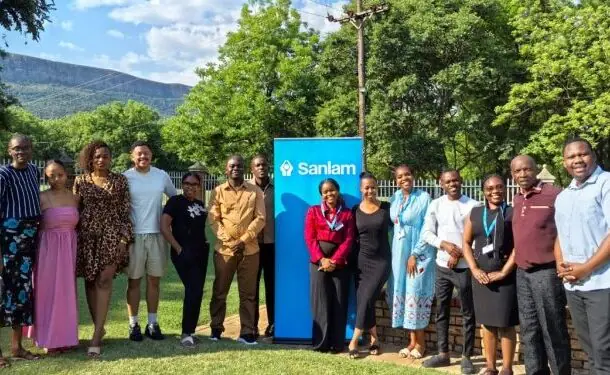
The 2026 Sanlam Summer School for Financial Journalists has begun in South Africa, with 12 reporters from six African countries taking part in a week-long programme designed to improve financial journalism and strengthen coverage of the continent’s economic development.
Journalists from Botswana, Ghana, Kenya, Malawi, Namibia and South Africa are attending the programme, which runs from October 25 to 30 at the Pecan Manor Conference and Function Venue in Hartbeespoort, near Johannesburg.
This year’s theme is: “Road to the 2027 Special Davos Meeting: Leading Africa’s Economic Narratives through Precision Journalism.”
Sanlam Summer School Convener Hopewell Radebe set out the programme’s guidelines during the opening session. Mamapongya Motsai, from Fraycollege, then introduced participants to the structure and objectives of the training.
Artificial intelligence was also included in the opening programme. AI trainer Malebo Phage led an introductory session examining the development of the technology and the risks faced by businesses and professionals that fail to respond to digital disruption.
As part of the opening activities, participants and organisers visited the Hartbeespoort Aerial Cableway and Hartbeespoort Dam.
The initiative is aimed at early-career journalists who have no more than three years’ experience in business and financial reporting.
Since it was established in 2003, the Sanlam Summer School has trained more than 550 journalists. Its stated focus is to strengthen public-interest financial journalism across Africa and support more accurate reporting on issues affecting the continent.
Sanlam’s backing for African media extends beyond the summer school and includes sponsorship of the Sanlam Group Financial Journalism Awards.
The programme also brings journalists together with professionals from other fields, creating an opportunity to exchange views on Africa’s economic priorities. Discussions focus on the importance of accurate, evidence-based reporting in shaping public understanding of the continent’s development.
Organisers say the 2026 programme will give participants greater skills and insight to report on economic policy, business trends and Africa’s position in the global economy with greater precision.
The training is being held as African economies and businesses face continuing digital change, with the organisers placing particular emphasis on the role of journalists in explaining complex economic developments to the public.
The 12 participants will spend the week developing their understanding of financial reporting while considering how journalism can contribute to clearer narratives about Africa’s economic progress and priorities.
Citi Business News’ Daniel Sackitey is reporting from Johannesburg, South Africa.
About the Author