

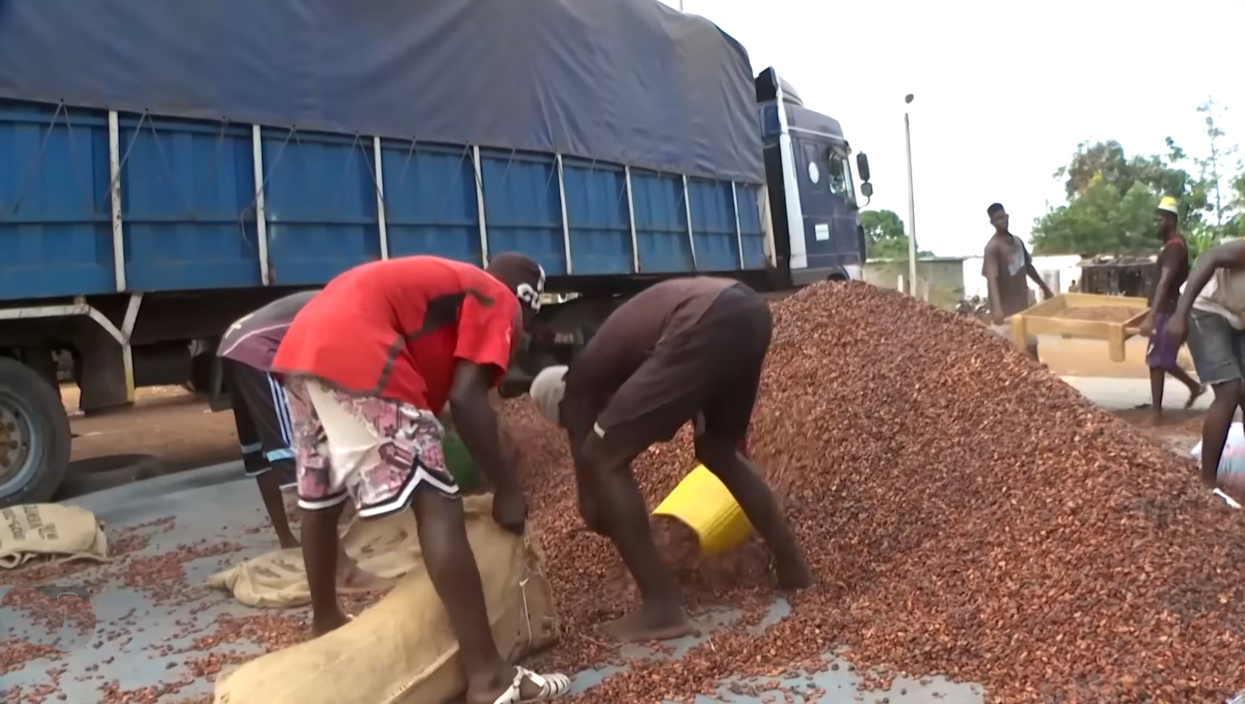
Ivory Coast alone is facing an enormous pile-up of unsold cocoa beans of up to about 200,000 tonnes by the end of March if current conditions persist, as traders refuse to buy at government-set prices that are now much higher than global market rates.
Global cocoa futures have plunged sharply in recent months, losing roughly half their value this year alone, making Ivorian beans less competitive.
Because regulators in Ivory Coast and Ghana set fixed farmgate prices before the season, traders who normally buy beans in advance have mostly stopped purchasing to avoid losses.
To prevent farmers going unpaid, authorities pledged to buy at least 100,000 tonnes of unsold cocoa from the main crop, costing around $500 million.
Officials are bringing forward the start of the mid-crop season (normally April–September), which allows them to lower prices paid to farmers sharply, a strategy aimed at boosting sales to traders.
The new mid-crop pricing is expected to be significantly below previous main-crop rates, helping narrow the gap between domestic prices and world markets.
Ghana’s cocoa sector is under severe financial pressure too, with licensed buyers accruing large debts to banks due to delayed payments and weak demand.
A surplus in global cocoa harvests and falling demand from chocolate manufacturers, who have been reducing cocoa content and using alternatives — have contributed to price drops and depressed trade.
Ivory Coast and Ghana together supply about half of the world’s cocoa, so disruptions here influence global futures, supply chains, and pricing dynamics.
Cocoa accounts for a major share of export earnings in Ivory Coast (around 40%) and a significant portion in Ghana (~15%), meaning this crisis has deep economic and social implications for farmers and rural communities.
Analysts say resolving the crisis hinges on aligning farmgate prices with global levels, reviving trader engagement, and stabilising market confidence.
Without sustained demand or structural shifts in pricing mechanisms, stockpiles could continue to grow, with knock-on effects for farmers’ incomes and chocolate prices worldwide.
About the Author