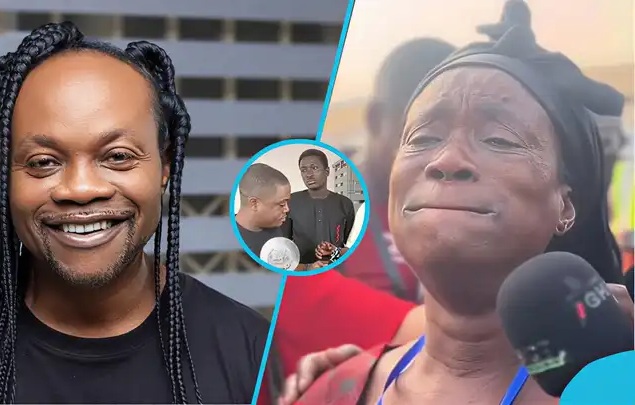

Ghanaian dancehall artist Shatta Wale has reignited public discussion over his past encounter with state authorities, recounting how officials once stormed his residence over a suspected missing vehicle—an incident tied to the widely publicised seizure of his luxury Lamborghini in 2025.
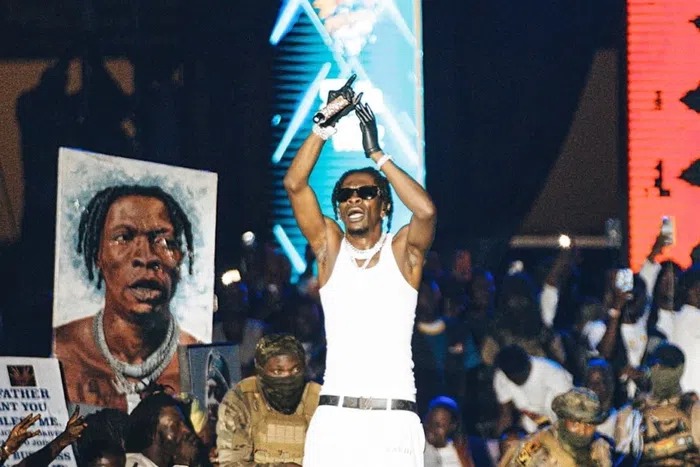
The musician revisited the episode during a live performance at the Gomoa Easter Carnival, where he paused mid-show to narrate his experience to an energized audience.
According to him, the unexpected visit by government officials quickly escalated into accusations of fraud, creating what he described as a tense and shocking moment.
“I was in Ghana when some government officials came to my house, saying they were looking for a missing car. Later, they accused me of fraud. They’re lucky they didn’t arrest me,” he told fans, drawing loud reactions from the crowd.
Shatta Wale’s remarks refer to the high-profile August 2025 operation carried out by the Economic and Organised Crime Office (EOCO), which led to the seizure of a yellow Lamborghini Urus from his residence.
The action followed a formal request from U.S. authorities as part of an international asset recovery investigation.
According to EOCO, the operation was conducted in collaboration with the Federal Bureau of Investigation and the United States Department of Justice, targeting assets believed to be linked to proceeds from a multi-million-dollar fraud scheme.
Investigators indicated that the luxury vehicle had been traced to Nana Kwabena Amuah, a Ghanaian national convicted in the United States and sentenced to 86 months in prison for his role in a fraud and money laundering operation estimated at about $4 million.
At the time of the seizure, authorities stated that Shatta Wale was present during the operation and cooperated by handing over the vehicle after being briefed on the nature of the investigation.
The Lamborghini was subsequently listed among assets suspected to have been acquired with proceeds of crime.
The artist was later invited for questioning by investigators but denied any knowledge of the vehicle’s alleged criminal links.
He maintained that he had purchased the car in good faith and was unaware of any underlying fraudulent transactions connected to it. Following the interrogation, he was granted bail as investigations continued.
The case quickly became one of the most talked-about intersections between the entertainment industry and international financial crime investigations, raising questions about due diligence, asset ownership, and the risks associated with high-value purchases in a globalised economy.
Shatta Wale’s latest comments at the Gomoa Easter Carnival have now brought the issue back into the spotlight, offering a personal account of the events that unfolded behind the scenes.
His narrative adds a human dimension to what had largely been discussed as a legal and investigative matter.
About the Author