
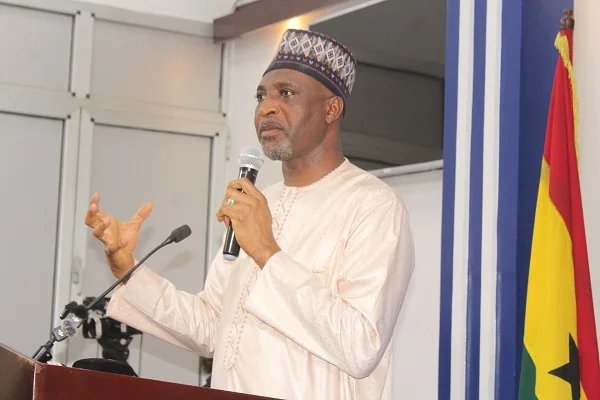
The National Chairman of the National Democratic Congress (NDC), Johnson Asiedu Nketiah, has openly rejected the findings of a Ministry of the Interior report, which claims there is no evidence linking election-related violence to a death recorded during the 2024 general elections, particularly in Kasoa in the Awutu Senya East constituency.
Describing the report as biased, selective, and politically motivated, the veteran politician accused the Interior Ministry headed by Muntaka Mohammed Mubarak of attempting to protect individuals allegedly involved in violence due to personal relationships and political connections.
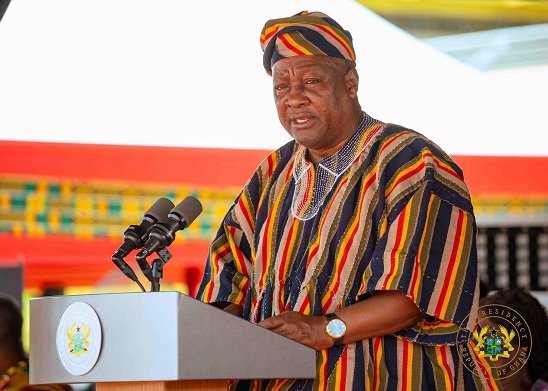
Asiedu Nketiah, popularly known as General Mosquito, made the remarks while addressing party supporters during the NDC’s “Thank You Tour” of the Central Region, a post-election engagement campaign in Kasoa.
The event in Awutu Senya East, one of the most politically volatile constituencies in recent electoral history, became a platform for him to launch a strong attack on the credibility of the Interior Ministry’s investigation.
His comments followed the release of a report by the Ministry of the Interior, led by Muntaka Mohammed-Mubarak, which concluded that there was no credible evidence directly linking election violence to the deaths recorded during the 2024 general elections in Kasoa.
The report also reviewed violent incidents from both the 2020 and 2024 elections, identifying multiple injuries and deaths nationwide but maintaining that certain high-profile allegations lacked sufficient proof.
Rejecting this position, Asiedu Nketiah said the report “smacks of an agenda” and accused state institutions of deliberately downplaying serious crimes to shield politically exposed individuals.
“We are not kids in this party,” he told the crowd virtually pointing accusing fingers at the Minister.
“If we have all agreed that election violence is bad for Ghana, then we must all commit to stopping it. We cannot pretend nothing happened in Kasoa. You don’t cover up violence because of friendships or relationships. That is unacceptable.”
He insisted that violence in Kasoa during both the 2020 and 2024 elections was real, traumatic, and well-documented, arguing that any attempt to deny or sanitise those events undermines justice and weakens the democratic institutions.
“If people died, people were injured, and communities were traumatised, then someone must be held responsible. Violence must never be trivialised or buried under politics,” he added.
Background
Kasoa, in the Awutu Senya East constituency, has become one of the most controversial flashpoints in the recent electoral history.
During the 2020 elections, violent clashes erupted around voter registration and polling activities, with gunshots fired near registration centres.
The situation escalated again in the 2024 general elections, when disturbances around polling stations led to multiple injuries and at least one reported death, triggering nationwide outrage and calls for accountability.
The incidents fuelled political tensions between the NDC and the New Patriotic Party (NPP), with rival accusations over responsibility, the alleged use of armed party supporters, and the role of state security agencies.
Civil society groups, media houses, and religious bodies repeatedly called for independent investigations and reforms in election security.
In response to public pressure, the Interior Ministry constituted a special investigative process to review election-related violence across the country, covering both the 2020 and 2024 elections.
The ministry later disclosed that nationwide, at least 15 deaths and more than 40 injuries were recorded across the two election cycles, though it argued that not all could be directly attributed to organised political violence.
Muntaka’s Position: “No Evidence, Not A Cover-Up”
At the centre of the controversy is Interior Minister Muntaka Mohammed-Mubarak, who has defended the ministry’s report, insisting that its conclusions were based strictly on available evidence, witness accounts, and cooperation from affected parties.
In earlier briefings, Muntaka stated that the investigative task force reviewed police reports, eyewitness testimonies, medical records, and video materials but could not establish a direct evidentiary link between certain political figures and the death recorded in Kasoa during the 2024 elections.
“Our responsibility is not to satisfy political narratives but to follow evidence,” Muntaka said.
“Where there is evidence, we will act. Where there is none, we cannot manufacture guilt. Justice must be based on facts, not sentiments.”
He also revealed that investigations had been hampered by a lack of cooperation from key witnesses, with some individuals particularly NDC activists refusing to testify and others being unavailable due to travel or medical reasons.
According to him, these challenges made it difficult to build legally sustainable cases.
Muntaka rejected claims of a cover-up, insisting that the ministry had no interest in protecting any individual or political group.
“We will not shield anyone—whether from the NDC, NPP, or any party. But accountability must follow due process. Ghana is a constitutional democracy, not a mob system,” he stated.
He further emphasised that the report also highlighted institutional failures, including lapses in election security coordination, weaknesses in crowd control, and breaches of discipline among some security personnel, which contributed to the escalation of violence
Punitive Action
Unmoved by the minister’s explanation, Asiedu Nketiah maintained that the absence of convictions does not mean the absence of crime.
He demanded punitive action against both masterminds and foot soldiers involved in election violence in 2020 and 2024, warning that impunity would only encourage future violence.
“If nobody is punished, then violence becomes a strategy. People will believe they can kill, injure, intimidate, and walk free. That is dangerous for our democracy,” he warned.
He vowed that the NDC would continue to pursue justice through political, legal, and institutional channels until accountability is achieved.
“This matter will not die. We will pursue it until the truth is known and those responsible are held accountable,” he declared.
About the Author