

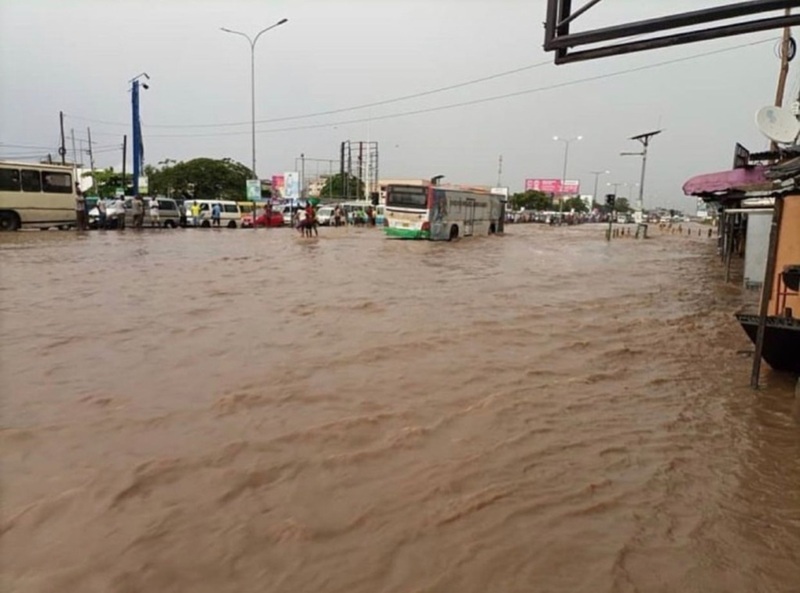
Several communities across Accra were left flooded on Sunday, March 29, 2026, after hours of intense rainfall overwhelmed drainage systems and brought movement in parts of the capital to a near standstill.
The downpour, which began earlier in the day, quickly inundated major roads and low-lying areas, affecting both residential neighbourhoods and key commercial corridors within the Greater Accra Region.
Major Roads And Communities Affected
Among the hardest-hit areas were Dansoman, Weija, Kasoa Old Barrier, Mallam Junction, Kaneshie, Accra Central, and Circle—locations already known for their vulnerability to flooding during heavy rains.
Residents reported that large sections of roads in these areas were submerged, forcing drivers to either abandon their routes or cautiously navigate through rising floodwaters. Pedestrians were also stranded in some parts, as walkways became impassable.
At busy transport hubs such as Circle and Kaneshie, traffic congestion intensified as vehicles struggled to move through waterlogged streets, causing delays and disruptions to commercial activities.
Drainage Systems Overwhelmed
Preliminary observations suggest that the flooding was triggered by the sheer intensity of the rainfall, which exceeded the capacity of drainage infrastructure in several parts of the city.
In many of the affected areas, choked gutters and poor drainage maintenance were cited by residents as contributing factors, compounding the impact of the downpour.
Low-lying communities such as Weija and Kasoa Old Barrier were particularly affected, with floodwaters quickly accumulating and spreading into adjoining roads and residential zones.
Residents Raise Recurring Concerns
Although no casualties had been officially reported at the time, residents expressed growing frustration over what they describe as a recurring problem each rainy season.
Many pointed to the persistent nature of flooding in these areas, raising concerns about long-term urban planning, drainage expansion, and enforcement of building regulations in flood-prone zones.
For traders and transport operators, the situation also translated into economic losses, as business activities slowed and accessibility to markets and workplaces became difficult.
As of the time of reporting, authorities had not released an official statement detailing the extent of damage or outlining immediate response measures.
Residents in affected communities continue to assess the impact on homes, shops, and vehicles, while others remain on alert in case of further rainfall.
About the Author