
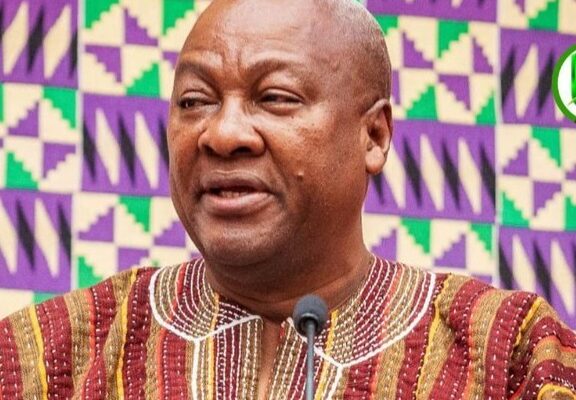
President John Dramani Mahama has reopened one of Ghana’s most painful economic chapters, describing December 19, 2022, as “one of the darkest days in the economic history,” following the country’s unprecedented debt default and the declaration of a moratorium on both domestic and external debt repayments under the administration of President Nana Addo Dankwa Akufo-Addo.
The statement marks one of Mahama’s strongest public condemnations of the previous government’s economic record since returning to office.
Delivering his 2026 State of the Nation Address in Parliament, President Mahama framed the 2022 default as a defining moment of national economic crisis that reshaped the financial standing, weakened investor confidence, and plunged households and businesses into deep uncertainty.
He reminded lawmakers that the debt default not only affected government finances but also disrupted livelihoods, credit systems, pension funds, and private sector operations, leaving long-term scars on the economy.
Against that background, Mahama used the address to defend his administration’s current economic management strategy, rejecting claims that his government resorted to artificial controls on foreign exchange markets.
He stated clearly that his government did not “arrest the dollar,” but instead focused on strengthening the Ghanaian cedi to compete more effectively against major international currencies.
According to him, currency stability must be achieved through productivity, exports, fiscal discipline, and investor confidence — not short-term interventions that distort markets.
The President stressed that economic governance, in his view, goes beyond macroeconomic indicators and policy declarations.
He argued that recovery must be measured in real human terms, including improved living standards, job creation, and expanded opportunities for young people.
Mahama said his administration’s focus is not simply on stabilising figures on paper, but on transforming those gains into concrete social and economic benefits for ordinary Ghanaians.
He outlined ongoing national efforts aimed at stabilising the economy and rebuilding key productive sectors, particularly energy, agriculture, and manufacturing.
These sectors, he noted, are being positioned as the backbone of long-term economic resilience, job creation, and industrial growth.
In addition, Mahama referenced the expansion of social intervention programmes designed to protect vulnerable groups who were hardest hit by the economic crisis that followed the debt default.
According to the President, his government’s recovery strategy is built on a combination of fiscal discipline, accountability, and targeted investment. He said this approach is intended to restore investor confidence, strengthen institutions, and accelerate national development, while avoiding the policy mistakes that, in his view, led to the 2022 economic collapse.
Placing the current administration’s agenda in historical context, Mahama suggested that Ghana’s economic crisis did not occur overnight but was the result of accumulated fiscal pressures, debt mismanagement, and structural weaknesses that culminated in the December 2022 default.
He portrayed his government’s task as not merely managing recovery, but rebuilding trust in the state’s economic governance systems.
About the Author