
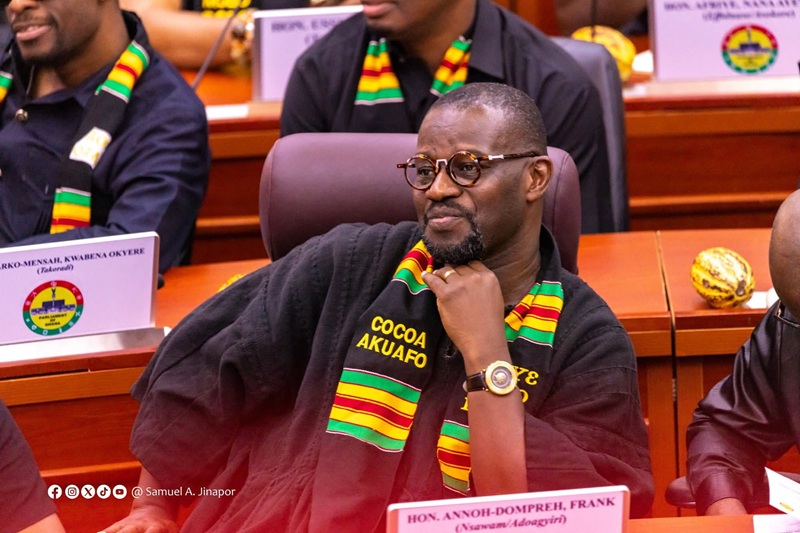
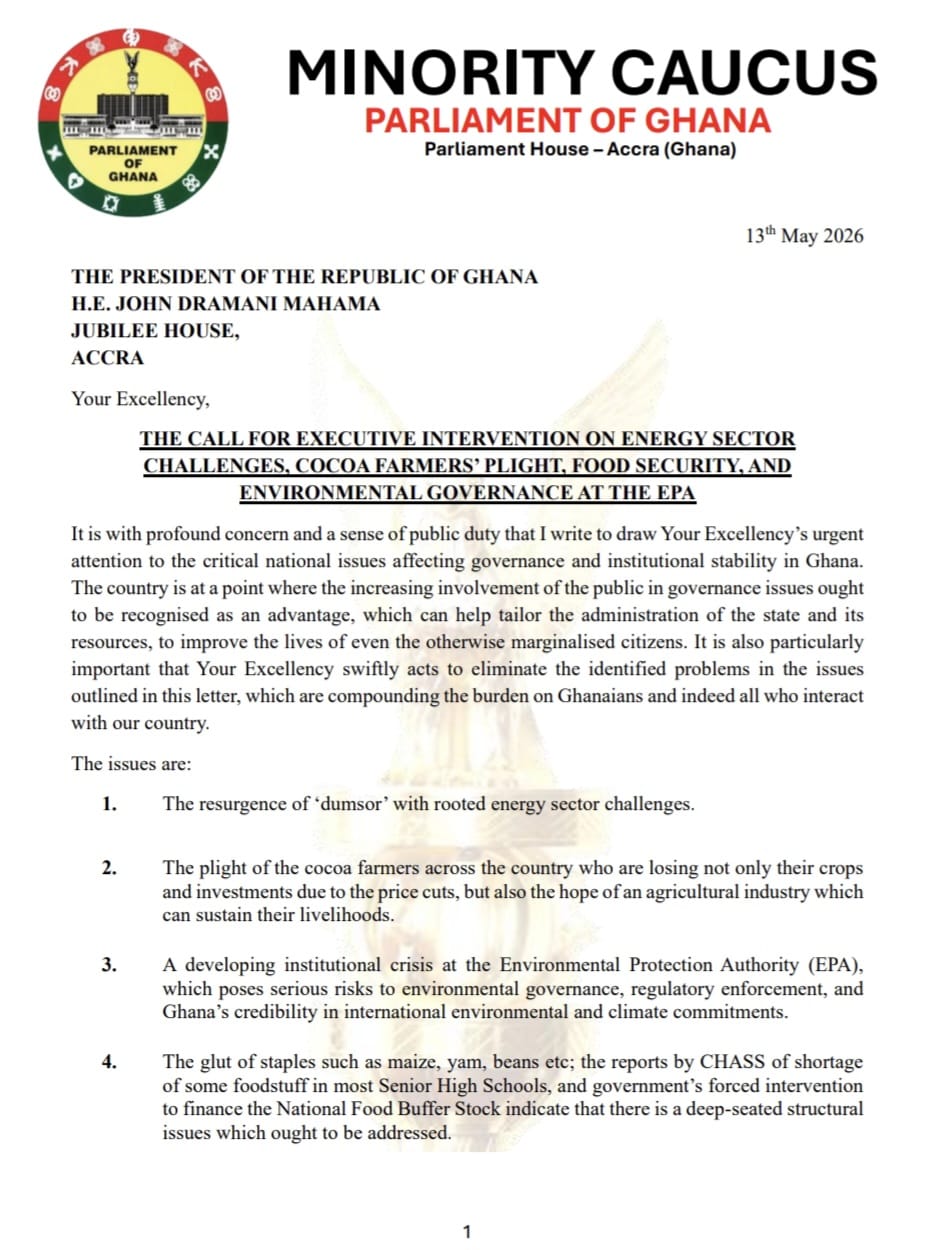
Minority Chief Whip and Member of Parliament for Nsawam-Adoagyiri, Frank Annoh-Dompreh, has formally petitioned President John Dramani Mahama, calling for urgent executive intervention to address what he describes as mounting governance and institutional crises confronting the country.
In a detailed letter dated 13th May 2026 and addressed to the Presidency at Jubilee House, the lawmaker raised alarm over the worsening energy sector challenges, the plight of cocoa farmers following producer price reductions, alleged administrative irregularities at the Environmental Protection Authority (EPA), and growing concerns over food distribution failures affecting Senior High Schools and farming communities.
In the strongly worded correspondence, Mr. Annoh-Dompreh argued that Ghana is reaching a critical point where increasing public participation in governance should be treated as an opportunity for corrective policy direction rather than ignored.
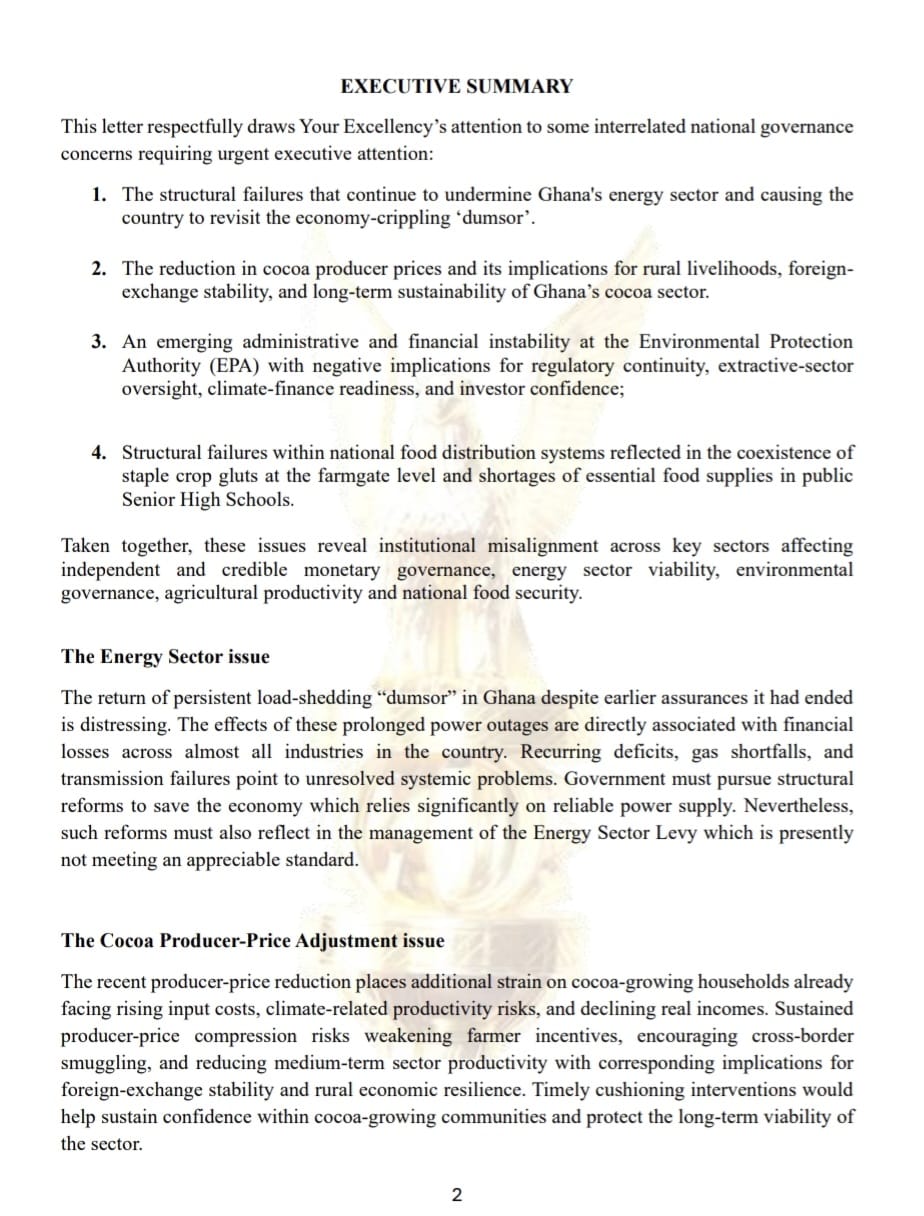
According to him, the combination of persistent power outages, declining cocoa farmer incomes, institutional instability at the EPA, and food supply distortions reflects broader structural failures across key sectors of the economy.
He warned that the cumulative effect of these challenges is imposing severe hardship on citizens and undermining confidence in state institutions.
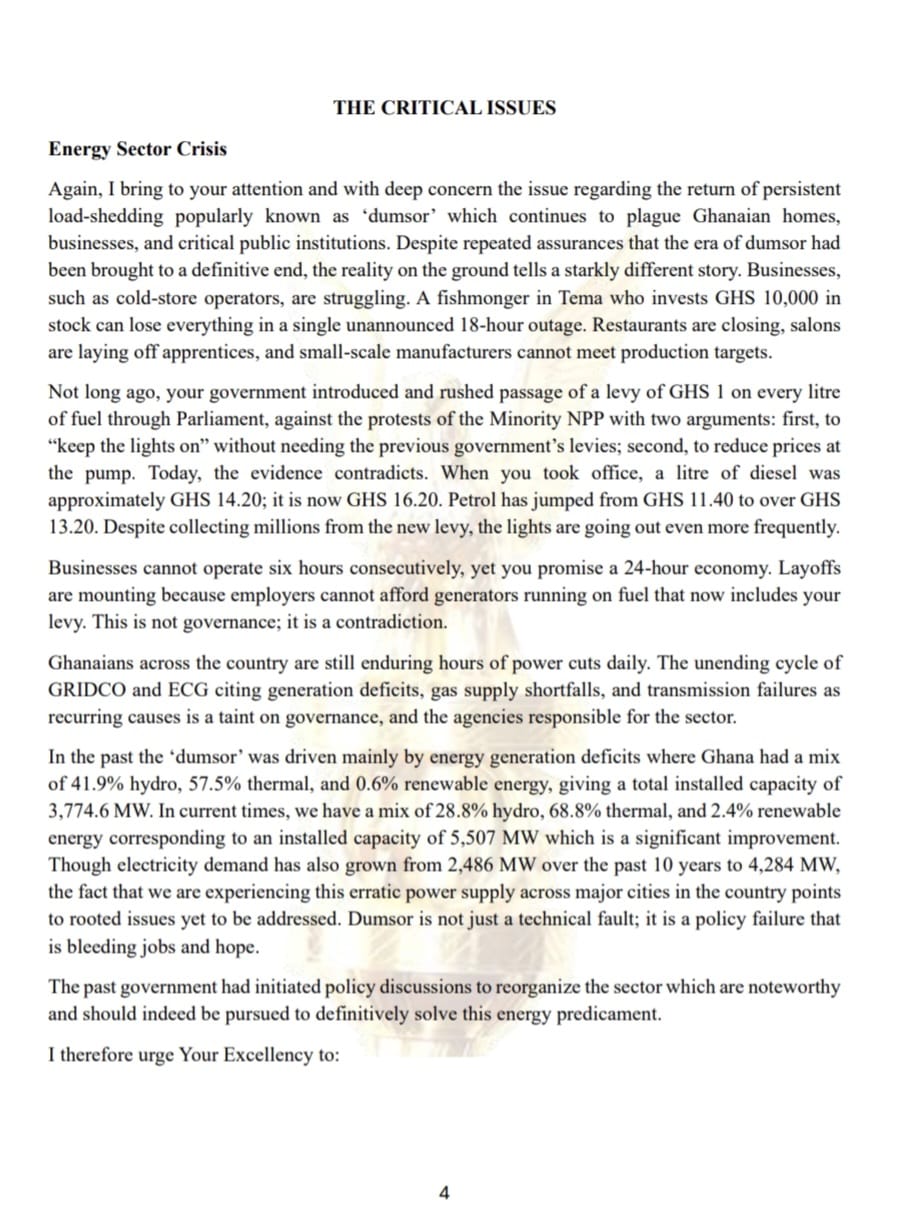
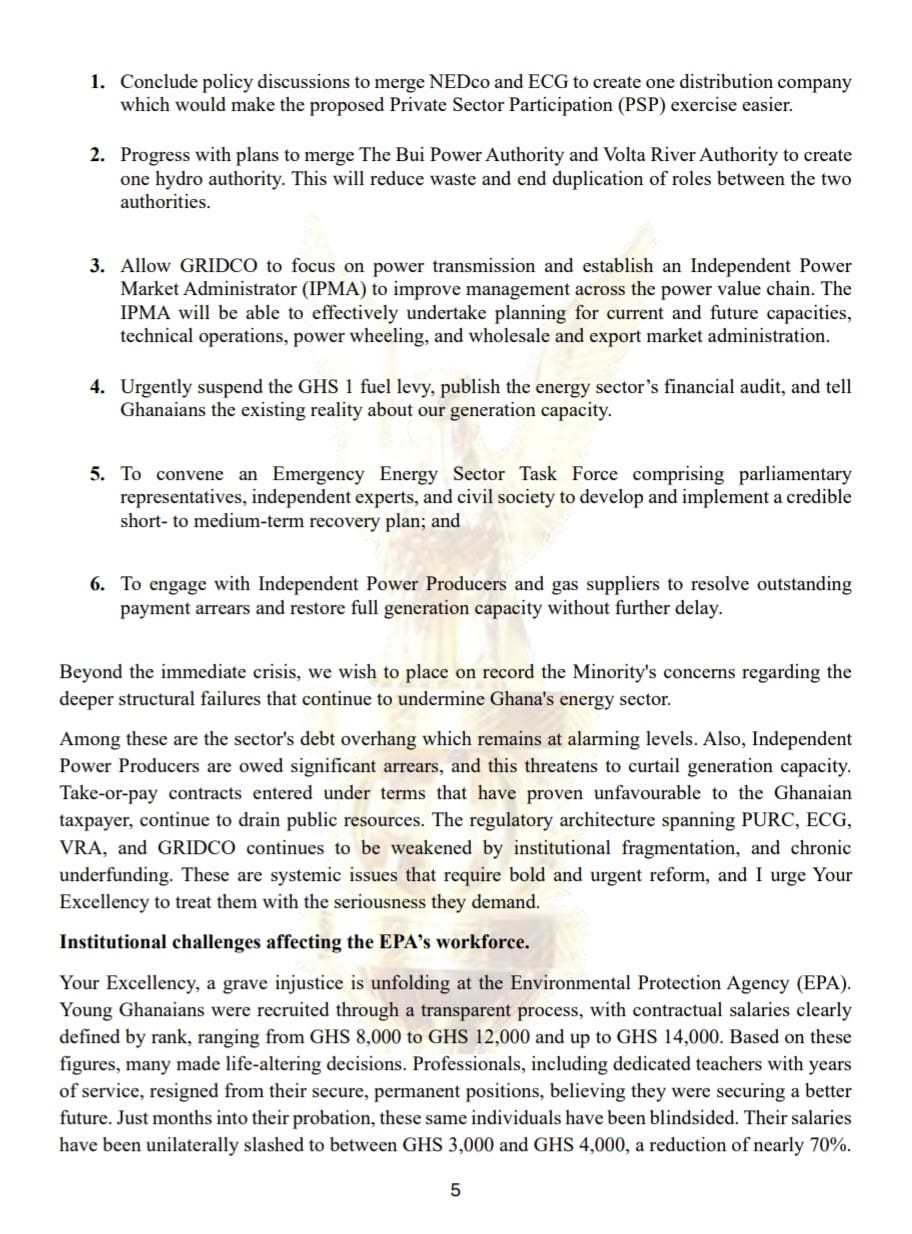
On the issue of the energy sector, the Minority Chief Whip expressed deep concern over the return of persistent power outages, popularly known as “dumsor,” despite assurances from government that the crisis had been resolved.
He argued that businesses and households continue to suffer major financial and operational disruptions due to prolonged and unannounced blackouts.
Citing examples of fishmongers, salons, restaurants and small-scale manufacturers struggling to survive, he described the situation as a policy failure rather than merely a technical problem.
Mr. Annoh-Dompreh also criticised government’s introduction of the GH¢1 fuel levy, arguing that it was justified as a means to stabilize the power sector and reduce fuel prices, yet neither objective has been achieved.
According to him, fuel prices have instead increased significantly while the power supply situation has deteriorated. He questioned how the government could promise a 24-hour economy while businesses are unable to operate continuously because of unreliable electricity and high fuel costs.
To address the crisis, he proposed far-reaching structural reforms within the power sector, including the merger of the Northern Electricity Distribution Company (NEDCo) and the Electricity Company of Ghana (ECG) into a single distribution company, the merger of the Bui Power Authority and the Volta River Authority, and the creation of an Independent Power Market Administrator to improve planning and efficiency across the energy value chain.
He further urged the President to suspend the GH¢1 fuel levy, publish a financial audit of the energy sector, and convene an emergency task force involving Parliament, independent experts and civil society.
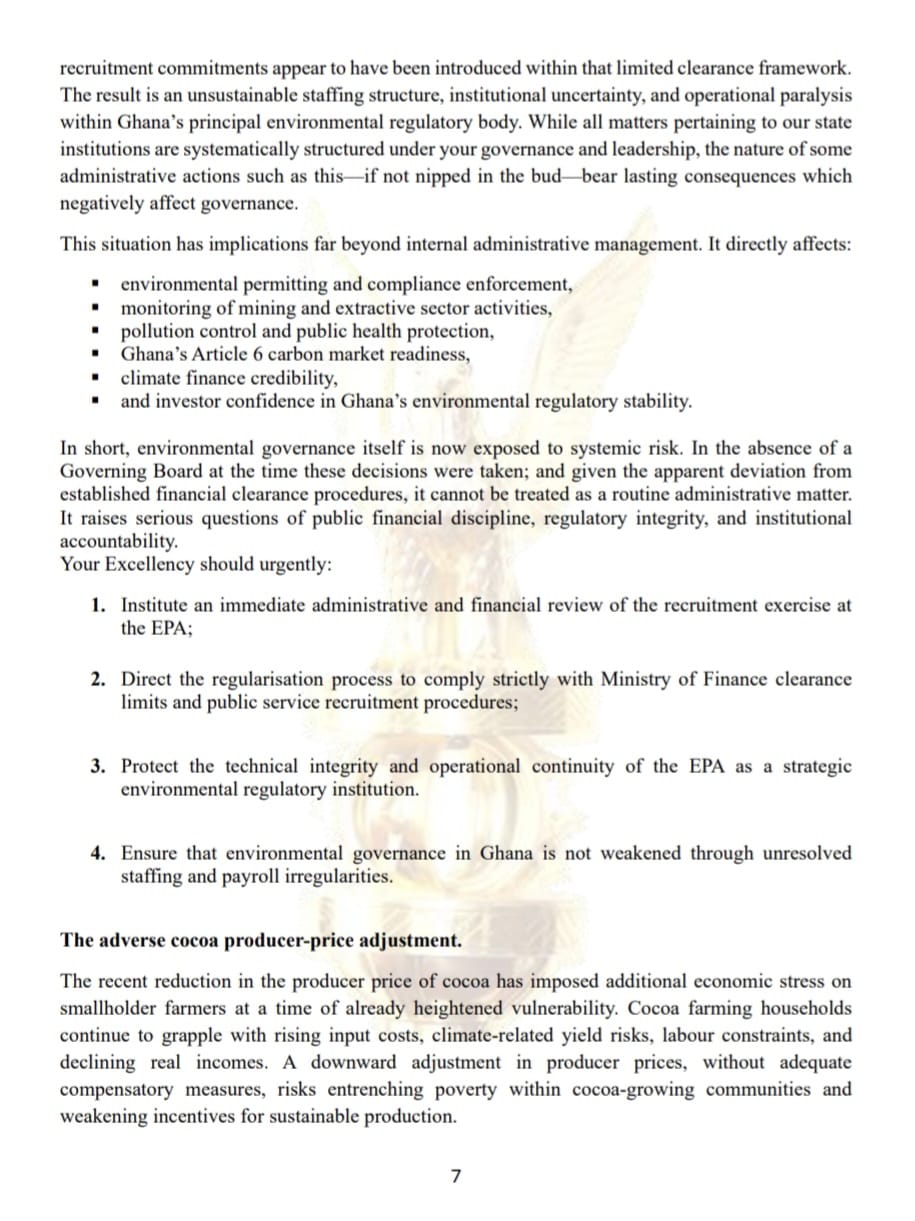
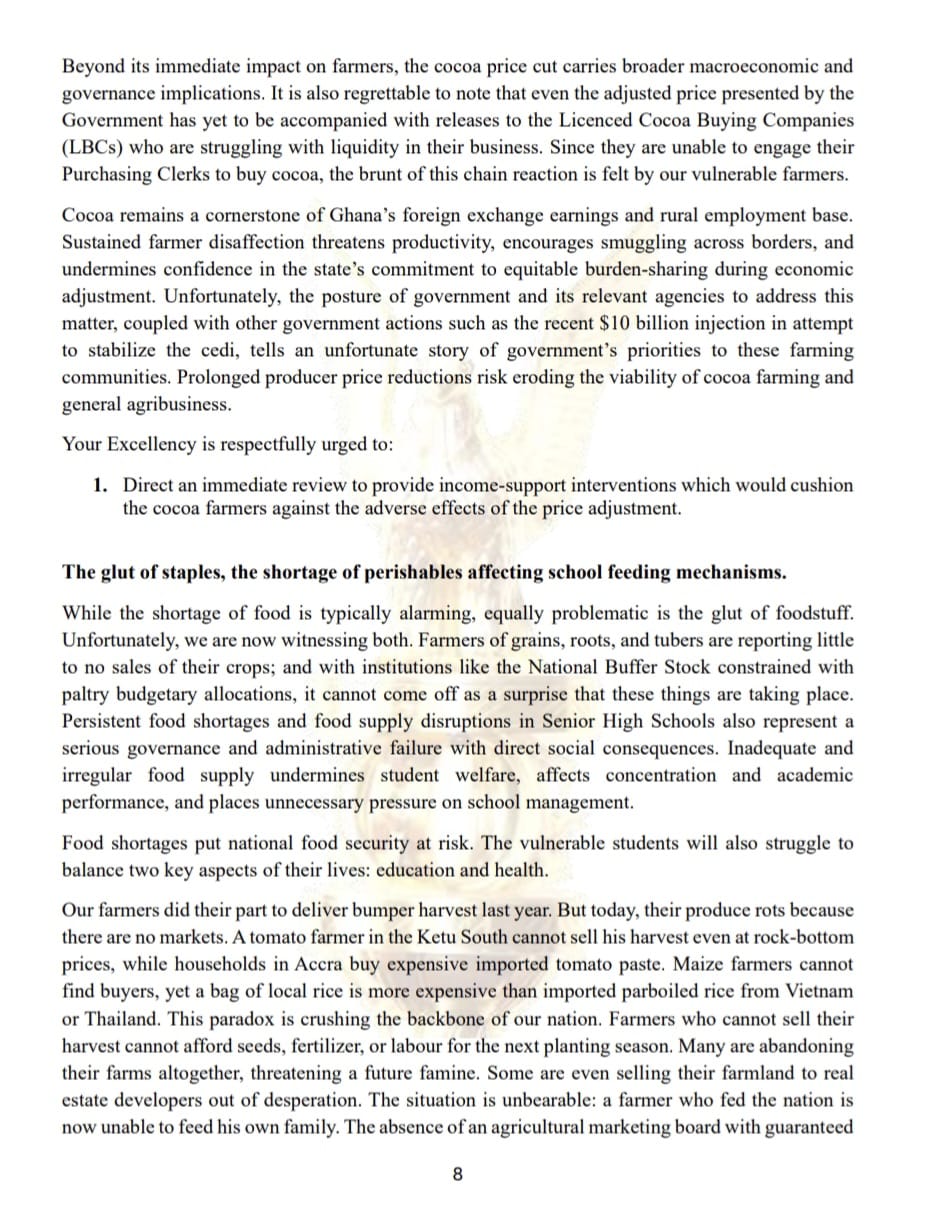
On cocoa production, the Minority Chief Whip warned that recent producer price reductions were devastating farming communities already struggling with rising production costs, climate-related risks and declining incomes.
He argued that the downward adjustment threatens the long-term sustainability of the cocoa sector by weakening farmer incentives, encouraging smuggling across borders, and reducing foreign exchange stability.
He further alleged that Licensed Buying Companies were struggling financially because the adjusted prices had not been accompanied by adequate releases from the state, leaving cocoa purchasing clerks unable to buy produce from farmers.
Mr. Annoh-Dompreh urged President Mahama to institute targeted income-support interventions for cocoa farmers to cushion them against the adverse effects of the price reductions.
He maintained that government’s current posture toward cocoa farmers sends the wrong signal to rural communities whose livelihoods depend heavily on the sector.
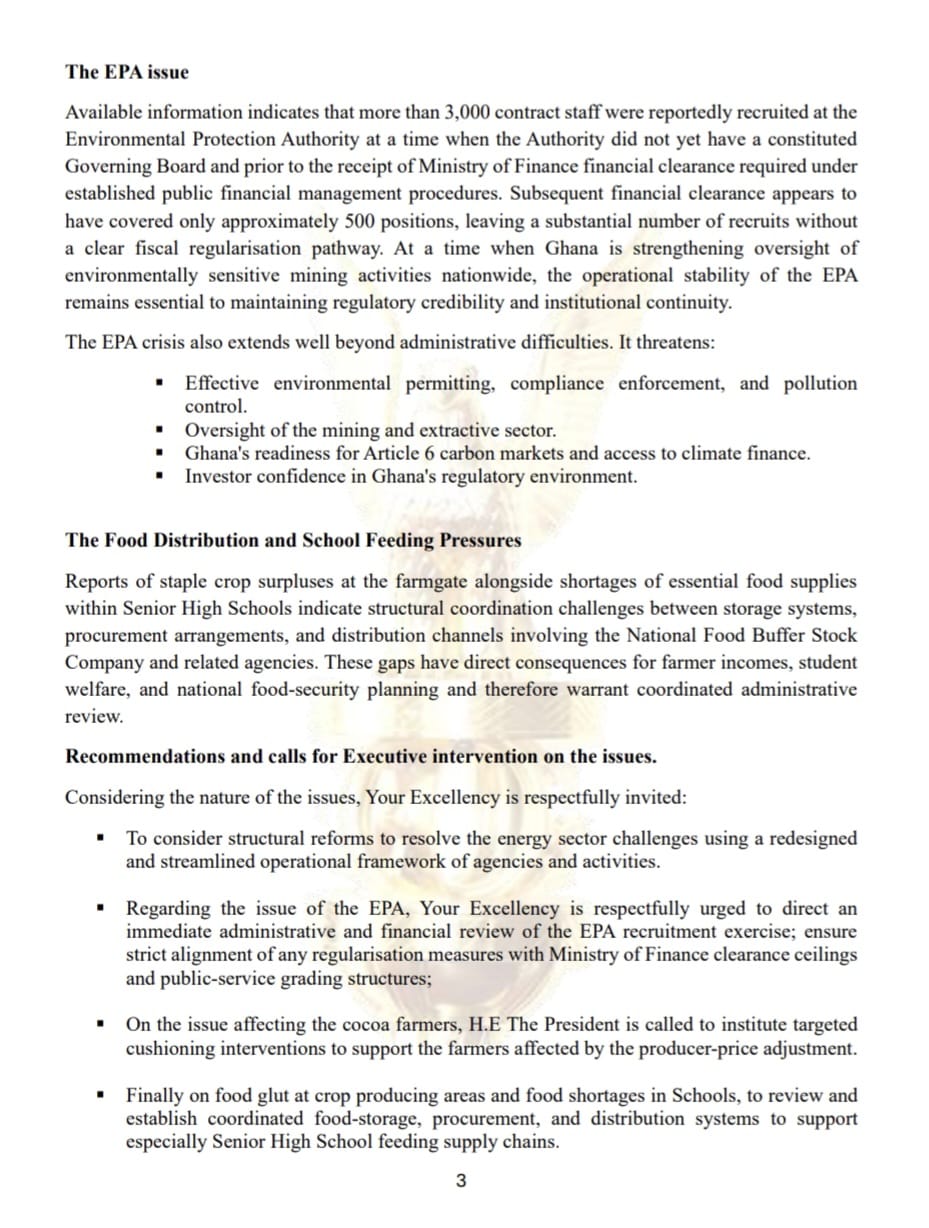
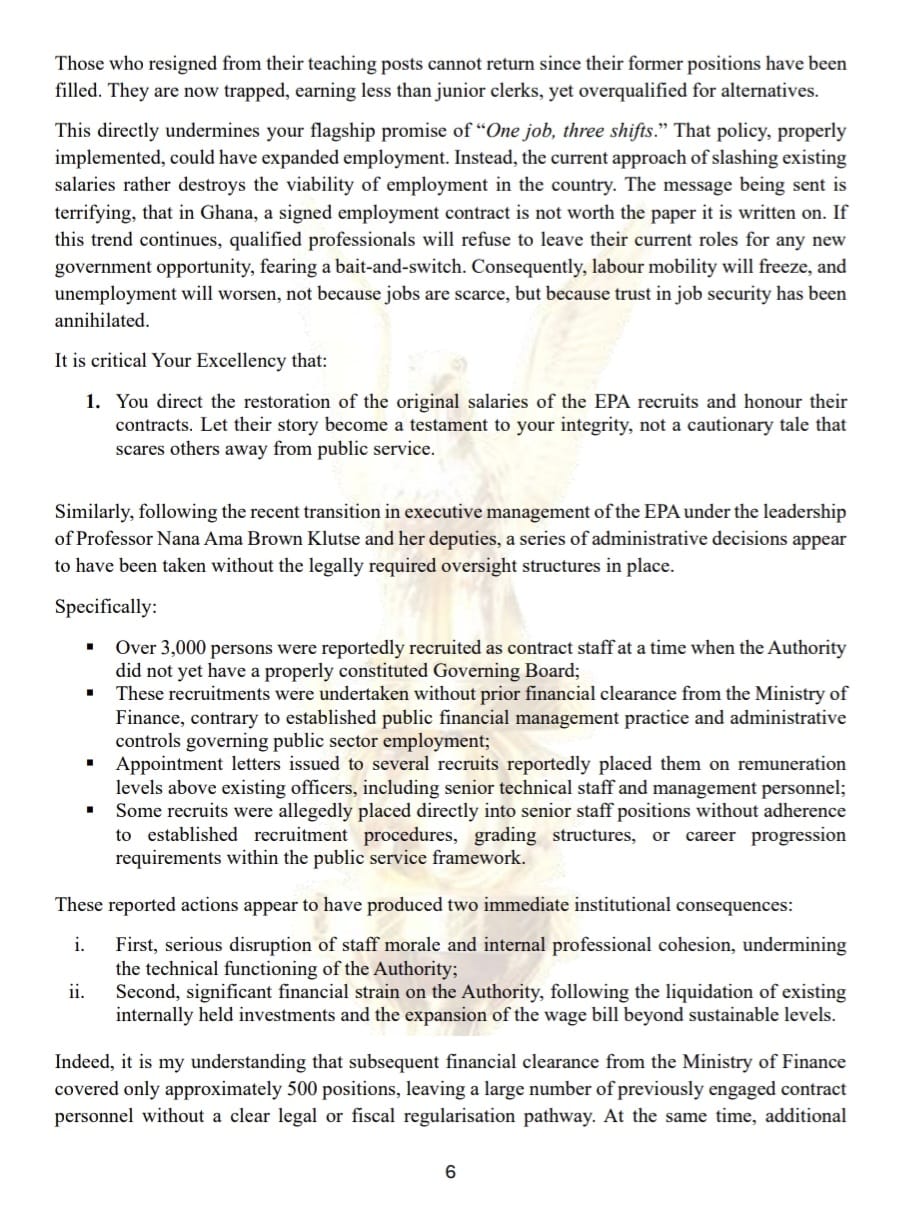
A substantial portion of the letter focused on the Environmental Protection Authority, where the MP alleged that over 3,000 contract staff were recruited without a constituted Governing Board and without prior financial clearance from the Ministry of Finance.
According to him, many recruits were offered salaries ranging from GH¢8,000 to GH¢14,000, prompting professionals, including teachers, to resign from secure positions to join the Authority.
He explained that the salaries were later drastically reduced to between GH¢3,000 and GH¢4,000, leaving many workers stranded and demoralised.
The Minority Chief Whip argued that the situation has created institutional instability within the EPA, undermining staff morale, disrupting operational continuity, and exposing environmental governance to systemic risk.
He warned that the alleged irregularities threaten the ability to enforce environmental regulations, monitor mining activities, access climate finance, and maintain investor confidence in its environmental governance systems.
He therefore called for an immediate administrative and financial review of the EPA recruitment exercise and demanded that all regularisation efforts strictly comply with Ministry of Finance clearance limits and public service procedures.
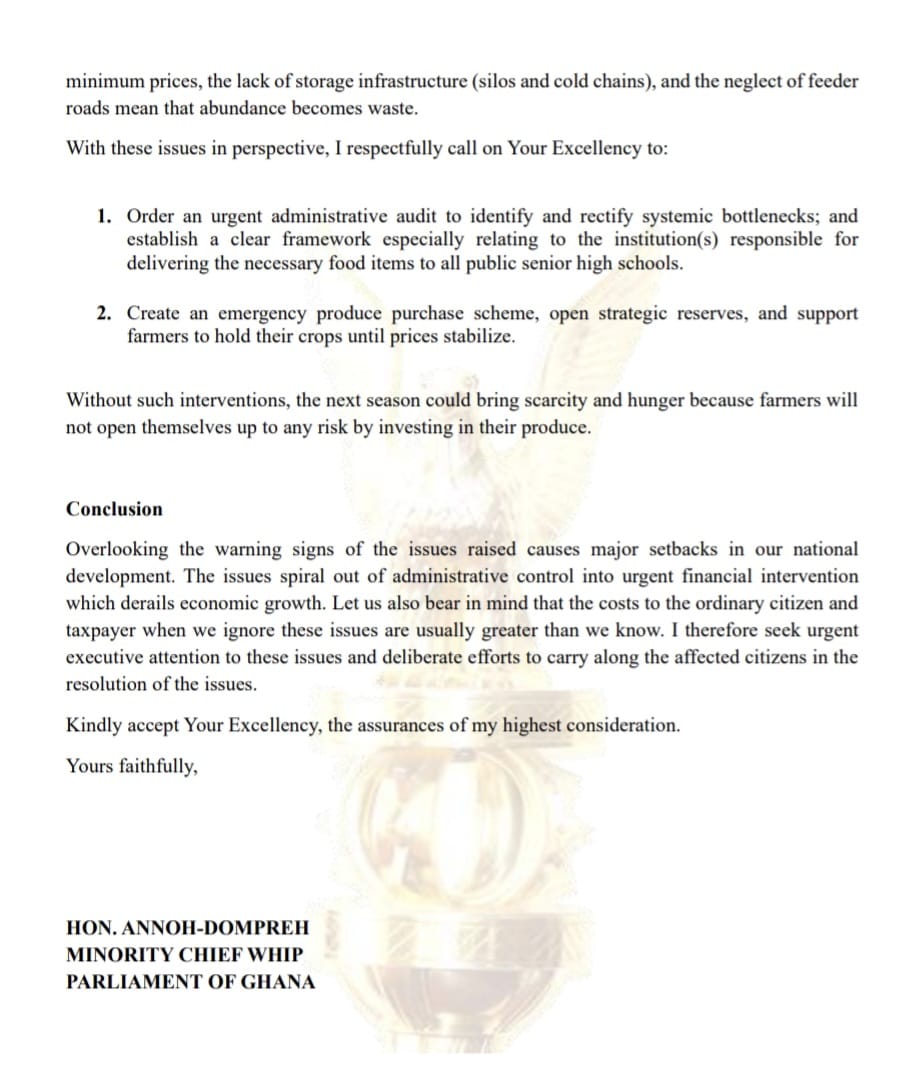
On food security, Mr. Annoh-Dompreh described the coexistence of food gluts at the farmgate level and shortages of food supplies in Senior High Schools as evidence of serious coordination failures within the agricultural and food distribution systems.
He noted that while farmers are struggling to sell produce such as maize, yam, beans and tomatoes, many public schools continue to face shortages of essential food items.
He blamed weak storage infrastructure, inadequate buffer stock financing, and poor procurement systems for the crisis.
According to him, farmers are increasingly abandoning agriculture due to the inability to recover investments, while some are even selling farmland to real estate developers out of frustration.
He warned that unless urgent interventions are introduced, Ghana risks future food shortages because farmers may refuse to invest in subsequent farming seasons.
To address the problem, the Minority Chief Whip called for an emergency administrative audit of the food distribution system, reforms to the National Food Buffer Stock framework, and the establishment of emergency produce purchase schemes and strategic food reserves to support farmers and stabilize prices.
Concluding the letter, Mr. Annoh-Dompreh cautioned that failure to address the warning signs across these sectors could lead to deeper economic and governance setbacks for the country.
He urged President Mahama to act decisively and involve affected citizens in finding sustainable solutions, insisting that the cost of ignoring the challenges would ultimately be borne by ordinary Ghanaians and taxpayers.
About the Author