
The Asantehene, Otumfuo Osei Tutu II, has called on political, corporate, and institutional leaders in Ghana to place integrity, ethical governance, and accountability at the centre of national development, warning that leadership without moral values poses a serious threat to society and economic stability.
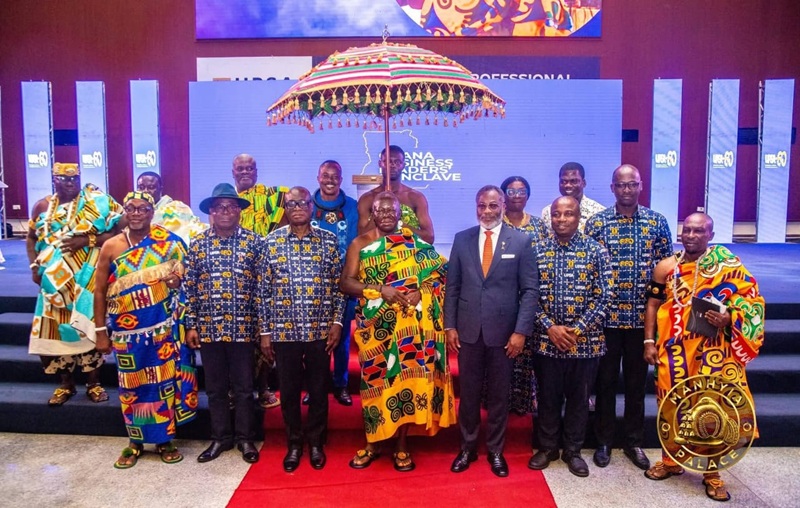
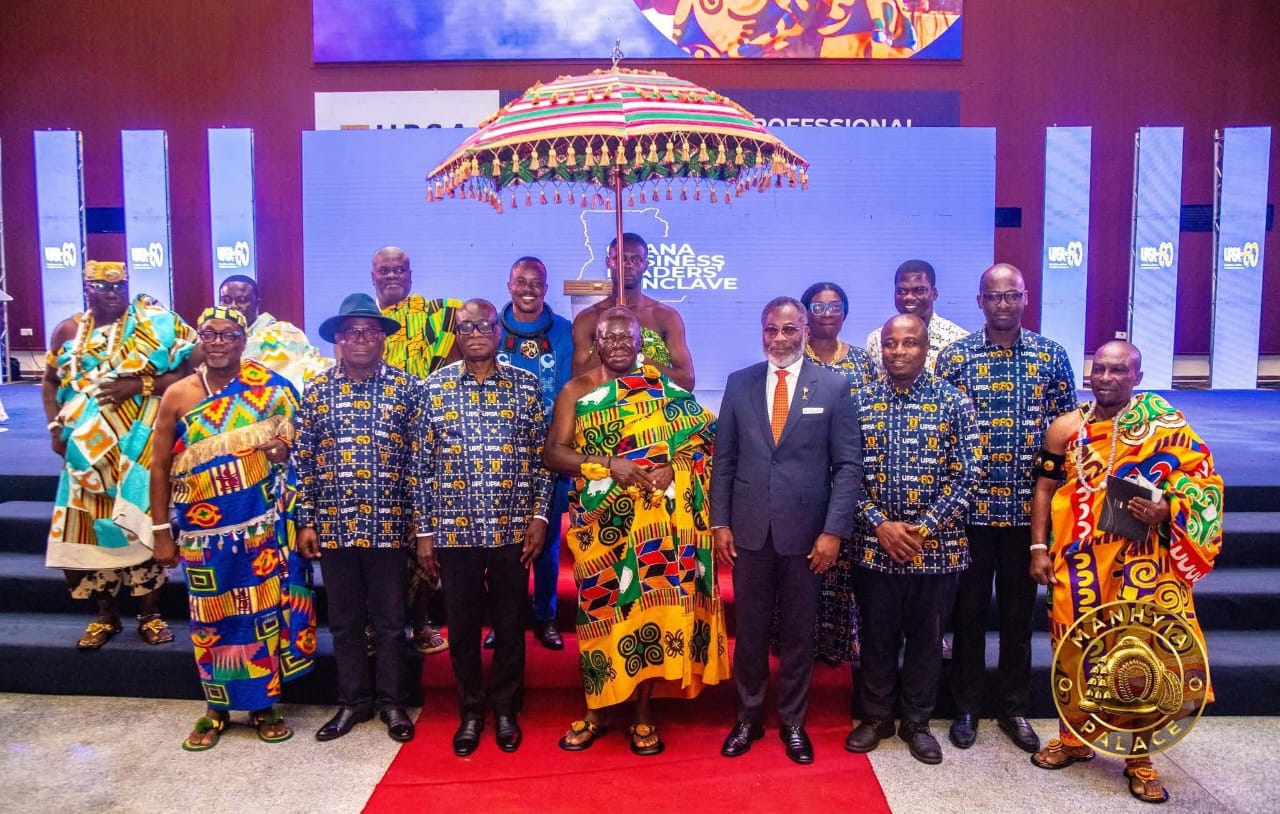
The traditional ruler delivered the message at the maiden edition of the Ghana Business Leaders’ Conclave hosted by the University of Professional Studies, Accra as part of activities marking the institution’s 60th anniversary celebrations.
Held at the Kofi Ohene-Konadu Auditorium on Friday, May 15, 2026, the high-profile gathering brought together chief executive officers, policymakers, captains of industry, academics, students, and public sector leaders to deliberate on ethical leadership and sustainable governance under the theme, “Leading with Integrity: Negotiation, Mediation and Ethical Governance for Business Sustainability.”
The event formed part of broader efforts by UPSA to position itself as a leading centre for professional excellence, ethical leadership, and business education in Africa. Over the decades, the university has evolved from a professional accountancy institution into one of the foremost public universities specialising in business, law, governance, and professional studies.
Before the public lecture, Otumfuo participated in a closed-door Business Leaders’ Conclave involving selected chief executives and senior industry players who held strategic discussions on resilient leadership, institutional sustainability, and responsible corporate governance amid growing economic and governance challenges.
Addressing participants during the public lecture, the Asantehene challenged leaders to move beyond public rhetoric and focus on building strong institutions founded on trust, discipline, and accountability.
According to him, the future economic progress would depend not only on investment and business expansion, but also on the moral character of those entrusted with leadership.
“Business without integrity is a danger to society, leadership without humility is arrogance, and prosperity without ethics is fragile,” Otumfuo stated as he urged both public and private sector leaders to restore confidence and credibility in governance systems.
Drawing lessons from the governance structures of the Asante Kingdom, the Asantehene explained that negotiation, mediation, and conflict resolution require more than technical expertise.
He stressed that genuine leadership demands patience, wisdom, fairness, and courage, adding that leaders must prioritise consensus-building and the collective good over personal interest and political convenience.
The remarks come at a time when Ghana continues to face increasing public concerns over corruption, weak institutional accountability, and declining trust in leadership across several sectors.
Analysts have frequently linked these governance challenges to economic instability and public frustration over the performance of state institutions.
Vice-Chancellor of UPSA, John Kwaku Mensah Mawutor, described the conclave as a defining moment in the university’s history and a reflection of its renewed commitment to nurturing ethical and transformational leadership for Ghana and the African continent.
According to Professor Mawutor, the university deliberately chose integrity and ethical governance as central themes for its 60th anniversary because of the increasing complexity of leadership challenges confronting modern societies.
“When we launched UPSA@60, we reflected deeply on the kind of leadership our nation and continent requires — leadership that is ethical, credible and capable of building peace amid complexity,” he stated.
The Vice-Chancellor further expressed appreciation to the Asantehene for accepting to convene the conclave and share his experience and wisdom on leadership, governance, and mediation with both students and industry leaders.
Chancellor of UPSA, Kofi Kodua Sarpong, also emphasised the importance of trust and principled leadership in sustaining institutions.
He noted that no organisation can survive long-term without ethical conduct and accountability at its core.
Chairman of the University Council, Harry Agbanu, described the engagement as a “masterclass in ethical leadership,” stressing that integrity remains indispensable in maintaining institutional credibility and business sustainability.
The Ghana Business Leaders’ Conclave was anchored on the broader UPSA@60 anniversary theme, “Six Decades of Transformative Education: Empowering Africa’s Future Business Leaders.” Organisers say the initiative is expected to become a major annual platform for conversations on governance, leadership, and sustainable development in Ghana and across Africa.
The event further reinforced the growing role of traditional authorities in national discourse beyond customary matters, particularly in areas of governance, mediation, peacebuilding and economic transformation.
Over the years, Otumfuo Osei Tutu II has increasingly become a prominent voice on national development issues, conflict resolution and institutional reforms, earning recognition both locally and internationally for his mediation efforts and leadership interventions.
About the Author