
The Minority in Parliament has called for an independent inquiry into the handling of sexual abuse allegations involving female students of Obuasi Senior High Technical School (SHTS).
The Minority Women’s Caucus says the inquiry must establish when authorities first became aware of the allegations, the actions taken in response, and whether political interference contributed to delays or attempts to suppress complaints against the school’s suspended headmaster, Zakaria Abdulai.
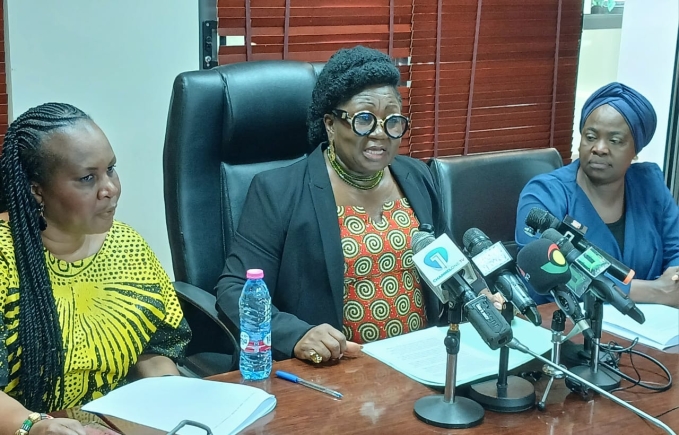
Addressing journalists in Parliament on Thursday, October 22, 2026, Deputy Minority Leader and Chair of the Minority Women’s Caucus, Patricia Appiagyei, said the suspension of the headmaster and the subsequent investigations by the Police and the Ghana Education Service were not enough to address concerns about possible institutional failures.
“These developments do not dispose of the central questions of when did the authorities first know, what did they do and why were these girls left seeking help?” she asked.
Mrs. Appiagyei said the allegations required a comprehensive investigation that prioritized the safety and dignity of the students while respecting the rights of the accused.
“The girls are entitled to protection, to be heard, and to have their complaints properly investigated, and those duties cannot wait for a conviction,” she said.
The Deputy Minority Leader outlined four key demands aimed at ensuring justice for the alleged victims, strengthening accountability, and preventing similar incidents.
The first is a thorough investigation into every allegation, prompt advice from the Attorney-General on the docket submitted by the Police, and prosecution wherever the evidence warrants it.
“We demand immediate action on one, a thorough investigation of every allegation, prompt advice from the Attorney-General on the submitted docket, and prosecution wherever the evidence warrants,” she said.
Mrs. Appiagyei also expressed concern about the police account of the case, which indicated that a complaint made in August 2026 had been investigated and the docket forwarded to the Attorney-General for advice.
She noted that while reports of the alleged abuse involved at least 19 girls, the public explanation given by the Police on October 20 indicated that only one complaint had been investigated.
She consequently urged the Police to reach out proactively and sensitively to other potential complainants to ensure their accounts were heard and investigated.
“Frightened schoolgirls should not have to navigate official machinery unaided before the state takes an interest in their safety,” she said.
The Minority also demanded immediate protection, counselling, medical care, and legal assistance for affected students. It called for prompt investigations into any intimidation or retaliation against complainants.
The third demand is an independent inquiry into the handling of earlier complaints, including possible political interference intended to delay action, suppress complaints, or shield the headmaster from scrutiny.
The caucus wants the inquiry to identify officials responsible for any failures and recommend appropriate sanctions, while ensuring that the identities of students are protected in any published report.
“The inquiry findings must identify the officials responsible for failures and recommend sanctions, but student identities must be protected in any published report,” it demanded.
Mrs. Appiagyei warned that any public official found to have suppressed complaints or obstructed justice must be held accountable.
“The government must identify who failed these students and hold them accountable. A suspension announced after public exposure cannot settle the question of earlier institutional failure,” she said.
The fourth demand is for the responsible ministers to make a statement to Parliament outlining the chronology of events, the actions taken by the relevant authorities, and measures being implemented to protect students.
Mrs Appiagyei said the authorities had a duty to protect students and investigate their complaints without waiting for criminal proceedings to conclude.
She also called for confidential reporting channels in schools that operate independently of any head teacher accused of abuse, arguing that students must be able to report misconduct without fear of intimidation or retaliation.
The caucus further urged the authorities to provide regular public updates on the investigation without compromising the identities, privacy, or safety of the complainants or undermining the integrity of the proceedings.
She also criticized what she considered unequal urgency in the government’s response to different matters, comparing its handling of the allegations with controversies surrounding arrests linked to criticism of the government.
“A government so sensitive to words spoken against it must show at least equal urgency when girls report violations of their bodies and dignity,” she said.
About the Author