

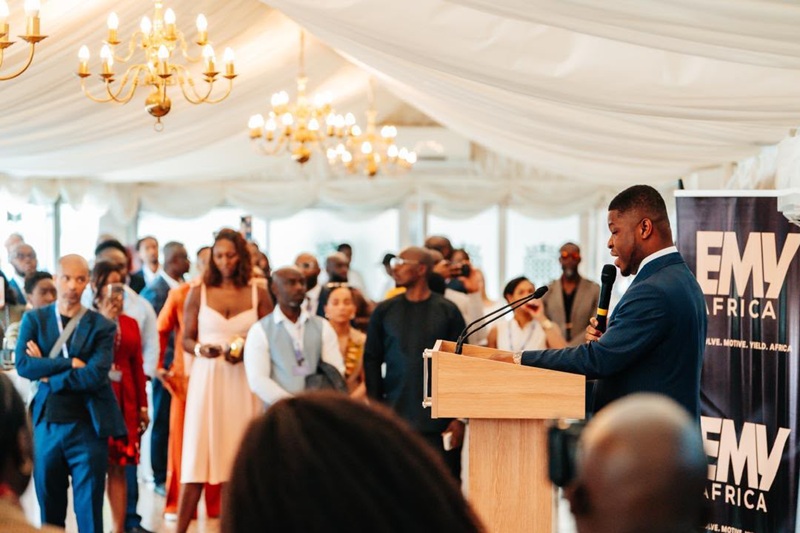
The Chief Executive Officer of the Ghana Gold Board (GoldBod), Sammy Gyamfi, has called on Africans living abroad to move beyond sending remittances home and become strategic investors in the continent’s transformation, insisting that Africa’s future prosperity depends on Africans owning and controlling the wealth generated from the continent’s vast natural and human resources.
Addressing the EMY Africa “Africa Rising Symposium” in London on Thursday, July 30, 2026, Gyamfi said Africa had reached a defining moment in its history where its growing relationship with the global African diaspora must evolve into a partnership capable of building industries, creating jobs, mobilising capital and strengthening institutions across the continent.
Speaking on the theme, “The Growing Relationship Between Africa and its Global Diaspora, and Why This Moment Matters,” the GoldBod CEO argued that Africa’s rise should no longer remain a slogan or a narrative defined by outsiders but should become a reality driven and owned by Africans themselves.
He posed what he described as the defining question confronting the continent: whether Africa would continue to rise merely as a supplier of raw materials, cheap labour and consumer markets for developed economies, or emerge as a continent of producers, innovators, industrialists, financiers and owners of its own economic destiny.
According to him, the answer lies partly in harnessing the enormous potential of the African diaspora, which he described as one of the continent’s greatest strategic assets.
Gyamfi noted that millions of Africans living abroad possess expertise, professional skills, technology, investment capital, international networks and governance experience that Africa urgently needs to accelerate its development agenda.
He stressed that the diaspora should no longer be viewed simply as relatives living overseas but as critical partners capable of reshaping Africa’s economic future through long-term investment and knowledge transfer.
The GoldBod CEO observed that Africa currently has one of the youngest populations in the world, citing estimates by the Mastercard Foundation’s Africa Youth Employment Outlook 2026, which indicate that the continent is home to approximately 532 million young people between the ages of 15 and 35, with that population expected to continue expanding through the 2070s.
He warned that while this youthful population represents Africa’s greatest opportunity, it could equally become one of its biggest challenges if governments fail to create sufficient employment, entrepreneurship and investment opportunities.
According to him, millions of young Africans continue to face unemployment, limited access to financing and inadequate opportunities despite acquiring education and skills.
He argued that African youth do not require charity or sympathy but access to capital, technology, mentorship, markets and institutions that reward innovation and hard work.
Gyamfi further acknowledged the enormous contribution that members of the African diaspora have made over the years through remittances, which have enabled countless families to educate their children, build homes and meet healthcare expenses.
However, he maintained that while remittances have sustained households, they cannot by themselves transform economies.
Instead, he called for a shift from consumption-based financial support to productive investments capable of establishing businesses, industries and jobs that would generate sustainable economic growth.
He encouraged Africans abroad to invest in sectors such as manufacturing, agriculture, agribusiness, logistics, information technology, renewable energy, healthcare, education, infrastructure and value-added industries.
According to him, the continent equally needs diaspora professionals to mentor young entrepreneurs, transfer knowledge and partner governments and local businesses to improve governance, innovation and institutional development.
Gyamfi stressed that investment should not be measured solely in financial terms, explaining that professional experience, technical knowledge, global networks, corporate governance skills and international exposure are equally valuable forms of capital capable of accelerating Africa’s development.
He therefore appealed to Africans living abroad not only to build houses in their home countries but to establish enterprises, sponsor entrepreneurship programmes and create opportunities that would generate long-term employment.
About the Author