

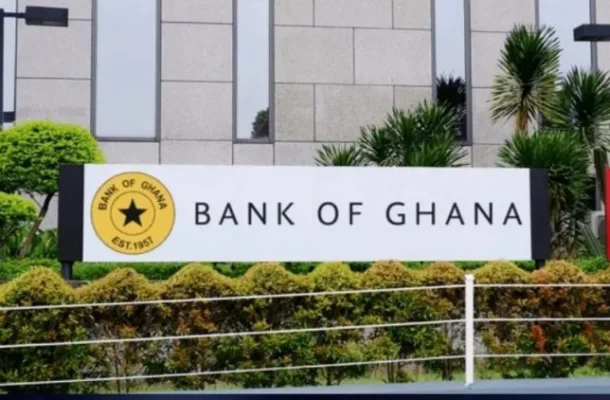
The Bank of Ghana (BoG) has announced a significant expansion in secured lending activities across the financial sector, with the total value of secured loans soaring to a record GH¢148.3 billion in 2025, underpinned by a sharp increase in collateral registrations and growing confidence in the country’s credit market.
The figures, contained in the Bank of Ghana’s 2025 Annual Report and Financial Statements, reflect the central bank’s ongoing efforts to strengthen the legal and regulatory framework for secured lending, improve access to credit, and deepen financial intermediation as the economy continues its recovery following years of macroeconomic instability and banking sector reforms.
The latest data show that a total of 484,059 security interests were registered in the Collateral Registry during 2025, representing a 26.7 percent increase over the 382,215 registrations recorded in 2024.
The steady rise in collateral registrations underscores growing utilisation of the Collateral Registry by financial institutions to secure lending transactions and reduce credit risk.
The report further revealed that the value of secured loans granted during the year more than doubled, rising from GH¢60.9 billion in 2024 to GH¢148.3 billion in 2025.
Banks remained the dominant providers of secured credit, accounting for GH¢94.5 billion of the total loans issued during the period, highlighting the banking sector’s central role in financing businesses and economic activities.
Sectoral analysis of the secured lending portfolio showed that Commerce and Finance overwhelmingly dominated credit allocation, accounting for 88.9 percent of all secured loans registered during the year.
The Agriculture, Forestry and Fishing sector received 4 percent of total secured lending, while the Services sector accounted for 3 percent, reflecting continued concentration of formal credit within commercial activities.
The Bank of Ghana also reported an increase in public utilisation of the Collateral Registry’s information services. Searches conducted on the Registry rose by 11.7 percent, reaching 72,901 in 2025 compared to 65,267 searches in the previous year. These searches enable lenders, businesses and other stakeholders to verify existing security interests before approving new credit facilities.
Meanwhile, the total volume of collateral assets registered climbed by 21.7 percent to 584,000 in 2025, up from 479,707 in 2024. Cash collateral remained the most preferred form of security accepted by lenders, followed by inventories and stock of goods as well as company and business assets, demonstrating the growing diversity of assets being used to secure loans.
Despite the overall growth in lending activities, the Collateral Registry issued only 200 Memoranda of No Objection certificates in 2025 to facilitate the enforcement and realisation of security interests, down from 301 certificates issued in 2024.
This represented a decline of 33.6 percent compared to the previous year.
The report also highlighted significant activity in the discharge of registered security interests. A total of 105,029 collateral registrations were discharged during 2025 as borrowers fulfilled their loan obligations and lenders released the pledged assets.
The discharge process remains an essential component of the collateral management framework, ensuring that borrowers regain full ownership rights over assets once financial obligations have been settled.
According to the Bank of Ghana, Savings and Loans Companies continued to dominate activities within the Collateral Registry, recording the highest volumes of collateral registrations, searches and discharges among all regulated financial institutions.
The strong growth in secured lending comes against the backdrop of sustained macroeconomic improvements recorded in 2025.
During the year, Ghana experienced a sharp decline in inflation, improving exchange rate stability, lower interest rates and a gradual recovery in private sector credit following the Bank of Ghana’s tight monetary policy measures and broader financial sector reforms.
The Collateral Registry remains one of the Bank of Ghana’s key institutional reforms aimed at improving access to finance, particularly for businesses that lack traditional forms of collateral.
By allowing movable assets such as inventory, equipment, receivables, and business assets to be pledged as security, the Registry has expanded financing opportunities for businesses while strengthening creditor confidence and reducing lending risks.
About the Author