
Court proceedings across Ghana have been suspended after members of the Judicial Service Staff Association of Ghana (JUSAG) began an indefinite strike over salary reviews and unpaid allowances.
The industrial action, which started on November 2, has left courtrooms empty and the entrances to courts closed, preventing litigants and legal practitioners from attending scheduled hearings.
At the Accra High Court and Supreme Court, the gates were shut and secured with red bands when inspected by the Daily Graphic. Normal judicial activity had stopped at both locations.
Salary review dispute
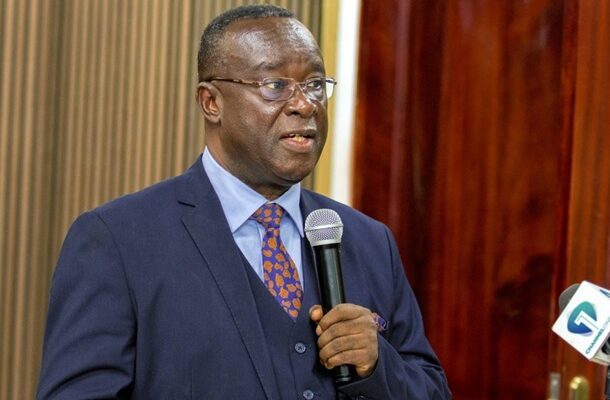
JUSAG General Secretary Abdulai Yakubu said the strike followed the government’s failure to meet the association’s demands on salaries and allowances.
He said JUSAG expected the government to approve the Judicial Council’s recommendations on a salary review and ensure that revised pay, along with outstanding arrears, was processed in November.
Mr Yakubu said the proposal communicated to the association did not reflect the Judicial Council’s recommendations or the conditions of service applying to judicial service staff.
He said the relevant instrument required their salaries to be reviewed at a rate no lower than that awarded to other public sector workers.
“Our C.I. that regulates our conditions of service says that our salary should be reviewed by a rate not below what is granted to other public sector workers,” he said.
“We all go to the same market, so it is reasonable that a lawmaker provides that for us. We don’t expect to have a review in the base pay that is below what is granted to our colleagues in the public sector.”
JUSAG wants a revised approval letter from either the Office of the President or the Ministry of Finance, if authorised by the President, endorsing the Judicial Council’s recommendations.
The association also wants the Controller and Accountant-General to implement the new salaries in November and pay arrears covering January to October 2026 during the same month.
“At minimum, we expect to see a revised letter from either the Office of the President or the Ministry of Finance, if they are so authorised by the President, approving the recommendation of the Judicial Council,” Mr Yakubu said.
“It should instruct the Controller and Accountant-General to make payments of the new salary in November and further instruct that the associated arrears from January to October will be paid in the same month.”
He said the rising cost of living had increased the financial pressure on members, particularly because of transport and accommodation costs.
“I know staff who come to work, and they can’t go home. They have to sleep and go home only during weekends because affording transport is a challenge for them,” he said.
Mr Yakubu rejected claims that JUSAG had ignored advice from the National Labour Commission (NLC), saying the commission’s position was not a directive or order.
He also criticised the Minister of Labour for not engaging the association promptly, saying JUSAG received a letter only towards the close of business last Thursday notifying it of a meeting scheduled for November 3.
Judicial Service response
A public notice signed by Judicial Secretary Musah Ahmed confirmed that JUSAG had declared an indefinite strike from November 2, 2026.
The Judicial Service said management was holding urgent discussions with relevant government stakeholders in an effort to resolve the dispute and restore court operations.
It apologised for the inconvenience caused to litigants, lawyers and other court users, and appealed for patience and understanding.
The notice said the matter was receiving urgent attention under the leadership of the Chief Justice, with efforts continuing to secure the prompt resumption of court services.
About the Author