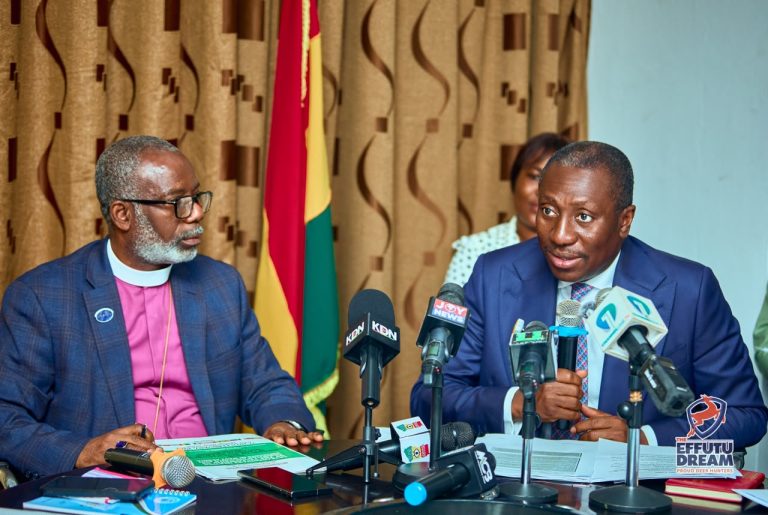


Minority Leader in Parliament, Alexander Kwamena Afenyo-Markin, has rejected what he describes as a sustained campaign of insults, personal attacks and false allegations against him following his decision to demand answers over the financial implications of the Bank of Ghana’s Domestic Gold Purchase Programme (DGPP).
In a statement issued amid the escalating political dispute over the operations of the Ghana Gold Board (GoldBod) and the loss of $1.7billion (GHC22billion) as reported by the IMF, the Effutu Member of Parliament said the attacks were calculated to divert public attention from the substantive questions he had raised concerning the reported losses incurred under the gold purchase programme and the role of GoldBod in the transactions.
Afenyo-Markin insisted that the allegations questioning his motives were “entirely false” and said he rejected them without qualification.
According to him, his interventions are rooted in Parliament’s constitutional responsibility to scrutinise public institutions and hold the government accountable for the management of public resources.
The Minority Leader said his position as head of the Minority Caucus places a specific responsibility on him to support Parliament in exercising its oversight mandate.
He therefore maintained that his questions about the reported losses were not motivated by personal interests or any improper agenda, but by what he described as the need for transparency and accountability in the management of state funds.
The latest statement comes against the backdrop of an increasingly heated public confrontation between Afenyo-Markin and GoldBod Chief Executive Officer Sammy Gyamfi.
The two have exchanged sharp criticisms following the Minority’s concerns about the financial performance of the gold-for-reserves programme and the reported US$1.7 billion loss recorded under the DGPP in 2025.
Afenyo-Markin said he was not surprised that individuals who were uncomfortable with scrutiny could resort to personal attacks in an attempt to change the subject of public discussion.
He argued that such tactics could not prevent the Minority from pursuing questions about the financial transactions involved in the programme.
“I remain focused,” the Minority Leader stated, signalling that the controversy would not deter him or the Minority Caucus from pursuing parliamentary action.

He said the Caucus would continue working towards initiating what he described as the necessary parliamentary processes for a comprehensive inquiry into the reported GH¢22 billion loss associated with the programme.
A central issue in the Minority’s argument is the International Monetary Fund’s assessment that the Bank of Ghana’s Domestic Gold Purchase Programme recorded losses of approximately US$1.7 billion in 2025.
Afenyo-Markin said the identity of the institution whose balance sheet ultimately reflects the loss should not be used to avoid accountability because the money involved belongs to the state.
He therefore wants Parliament and the public to establish precisely how the reported loss was generated.
Among the questions he says must be answered are the identities of the gold off-takers, the discounts applied to their purchases, the authorities under which those discounts were approved and the fees earned from the transactions.
The Minority Leader is also demanding a detailed breakdown of the reported US$1.7 billion loss.
He wants the relevant authorities to disclose how much of the loss resulted from foreign-exchange differentials, how much was connected to the prices at which GoldBod purchased and sold gold, and what management considerations informed the decisions taken throughout the transactions.
Afenyo-Markin said those questions should not remain matters for political exchanges between the government and opposition. Rather, he argued, they must form part of the official public record, allowing Ghanaians to assess the evidence for themselves.
He further pledged that the Minority would publish its questions and supporting sources as part of its effort to enable citizens to examine the available evidence instead of relying solely on statements from either side of the political divide.
The statement also signals a possible escalation beyond parliamentary and political debate.
Legal Remedy
Afenyo-Markin disclosed that he intends to pursue what he described as “appropriate legal remedies” over defamatory statements allegedly made against him personally during the controversy.
He did not, however, allow the personal attacks to overshadow what he considers the central issue.
He reiterated that his attention, and that of the Minority Caucus, remains focused on the gold purchase programme, the decisions taken by the institutions involved and the public funds at stake.
About the Author