
The Ghanaian government is asking Parliament to approve GH¢389.2 billion in spending for 2027, equivalent to 21.6% of gross domestic product (GDP), while promising that the budget will not introduce any new taxes.
Revenue and grants are expected to total GH¢323.4 billion, or 17.9% of GDP, to support the government’s policies and programmes.
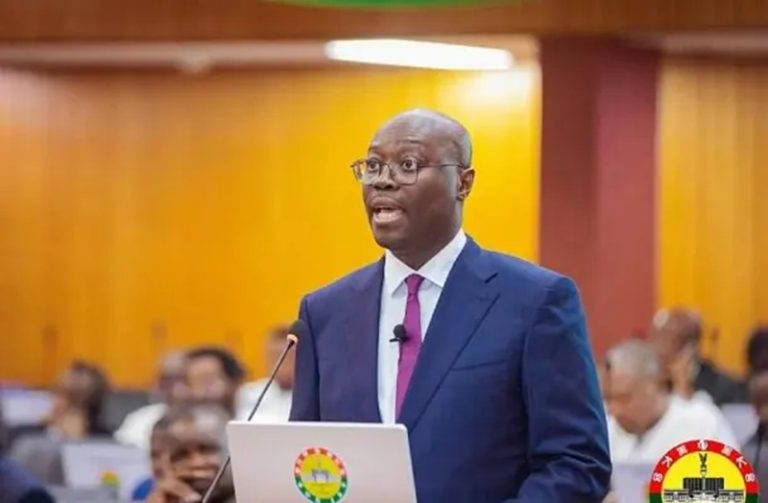
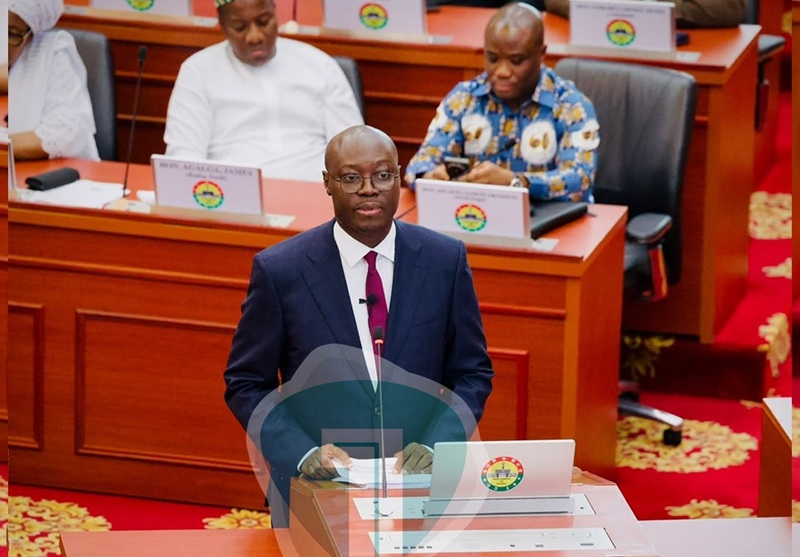
The targets are set out in the 2027 Budget and Economic Policy, presented to Parliament yesterday by Finance Minister Dr Cassiel Ato Forson. The budget, the third of President John Dramani Mahama’s administration, is themed: “The New Economy, New Ghana, Jobs and Prosperity.”
The government is targeting overall real GDP growth of at least 5.2% in 2027, non-oil real GDP growth of 5.7%, and end-year inflation of between 6% and 10%. It also expects a primary surplus of at least 0.5% of GDP on a commitment basis and gross international reserves covering not less than six months of imports.
Dr Forson said government policies would focus on creating jobs, strengthening public confidence and continuing infrastructure projects, including the Accra-Kumasi Expressway and Western Corridor Railway Line.
“Since 2025, we have acted to give families breathing space and businesses room to grow,” he said, listing the abolition of the E-Levy, withholding tax on betting and lottery winnings, the COVID-19 Levy, the Emissions (Nwusie) Levy and VAT on motor vehicle insurance.
“This 2027 budget will not introduce any new tax. Our task is to collect what is lawfully due, close the leakages and make the revenue system work better,” he added.
The government plans to review and modernise the Income Tax Act, the Revenue Administration Act, Stamp Duty administration and the Communications Service Tax framework. Customs Tariff Grant Duty Concessions on selected raw materials, machinery and inputs will also be reviewed to support local industry.
Dr Forson said Ghana’s Double Taxation Agreements would be reviewed in line with the United Nations’ Framework Convention on International Tax Cooperation, with the aim of tackling evasion and treaty abuse while protecting legitimate investment.
Revenue and spending
Of the projected GH¢323.4 billion in revenue and grants, GH¢320.2 billion is expected from domestic revenue and GH¢3.2 billion from project grants. Domestic receipts comprise GH¢256.1 billion in non-oil tax revenue, GH¢33.5 billion in non-oil non-tax revenue, GH¢15.5 billion in oil revenue and GH¢15.1 billion from other sources.
Compensation of employees is budgeted at GH¢104.1 billion, including GH¢92.6 billion for wages and salaries and GH¢11.5 billion for social contributions such as pensions, gratuities and social security.
Interest payments will account for GH¢61 billion, including GH¢51.5 billion on domestic obligations and GH¢9.5 billion on external debt. A further GH¢13.7 billion is allocated to goods and services.
The budget provides GH¢76.5 billion for statutory and earmarked funds, GH¢100.4 billion for capital expenditure and GH¢13.9 billion to clear arrears, including GH¢4.3 billion owed to independent power producers.
The cash-basis deficit is projected at GH¢65.8 billion, or 3.6% of GDP. It will be financed through net domestic financing of GH¢84.9 billion and a net repayment of GH¢17.7 billion in external financing.
On a commitment basis, the deficit is expected to be GH¢51.9 billion, or 2.9% of GDP, while the primary balance is projected to record a GH¢9 billion surplus, equal to 0.5% of GDP.
2026 performance
Provisional figures for January to October 2026 show a primary surplus of 1.4% of GDP on a commitment basis, putting the government on course to meet its full-year target of 1.5%.
Revenue and grants reached GH¢219.3 billion, 3.5% above the GH¢211.8 billion target. Domestic revenue totalled GH¢218.2 billion, 4.1% above target, while expenditure of GH¢239 billion was 7.6% below the programmed amount.
The government also cleared GH¢20.8 billion in legacy arrears. Public debt stood at GH¢759.3 billion at the end of October 2026, representing 47.5% of GDP, with 56.4% owed domestically and 43.6% externally.
About the Author